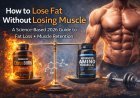
How to Lose Fat Without Losing Muscle
A science-based 2026 guide to fat loss with muscle retention. Learn how protein, resistance training, recovery, and smart supplementation help preserve lean mass while cutting fat.
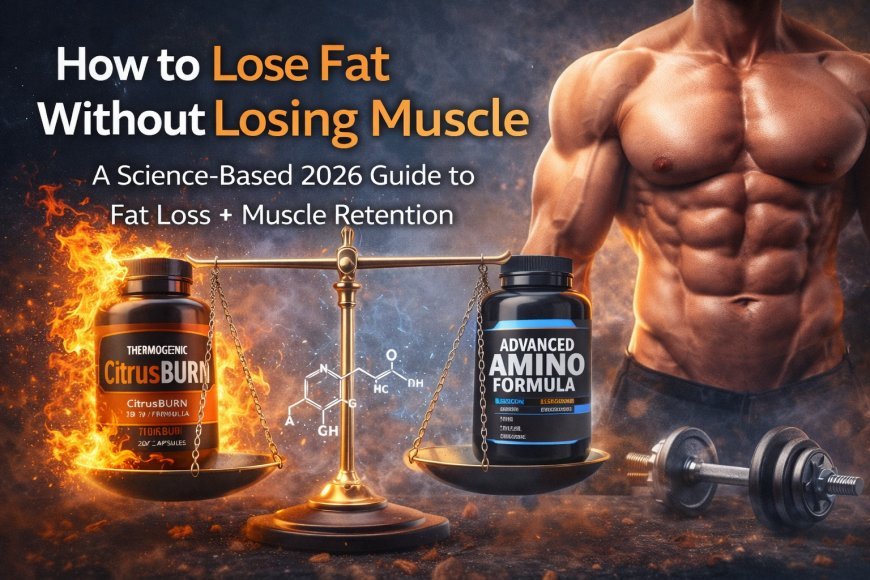
Can You Lose Fat Without Losing Muscle?
Yes. Fat loss with muscle retention is possible when calorie deficits are controlled properly and supported with adequate protein intake, resistance training, recovery, and sustainable dieting strategies. The goal is not just losing weight, but preserving lean mass while reducing body fat.
Fat Loss + Muscle Retention
A Science-Based Guide for Smarter Cutting
The real goal is not just losing weight. The goal is losing fat while keeping the muscle that shapes your physique and supports your metabolism.
Introduction: The Real Problem No One Talks About
Most people do not fail at fat loss.
They fail at fat loss while preserving muscle.
And that difference changes everything.
Because when dieting is poorly structured:
- body weight drops
- the scale goes down
- clothes may feel looser
But beneath that, lean mass may be dropping too.
That can lead to:
- a lower metabolic rate
- a softer physique
- weaker gym performance
- easier fat regain later
“I lost weight, but I don’t look better.”
The real goal is not just weight loss.
The goal is fat loss with muscle retention.
Biologically, that is harder than most fitness content makes it sound, because a calorie deficit changes protein balance, recovery, hormone signaling, and total energy expenditure at the same time.
Need the bigger dieting context first?
Start with The Fat Loss Paradox to understand why aggressive dieting often backfires before you try to cut harder.
1. Why Muscle Loss Happens During Dieting
Energy Deficit and Muscle Protein Balance
Muscle mass is regulated by the balance between:
- muscle protein synthesis (MPS)
- muscle protein breakdown (MPB)
When you enter a calorie deficit, your body senses reduced energy availability.
It responds by adapting.
That adaptation may include:
- reduced metabolic rate
- reduced thyroid output
- higher fatigue
- greater muscle protein breakdown
If muscle protein synthesis stays below muscle protein breakdown long enough, lean mass is lost.
This is basic physiology, not theory.
The Role of mTOR and Anabolic Signaling
Muscle retention depends on continued anabolic signaling, especially through the mTOR pathway, one of the key regulators of muscle protein synthesis.
But during prolonged calorie restriction:
- amino acid availability may decrease
- training performance may fall
- anabolic signaling may weaken
If protein intake and resistance training quality are insufficient, muscle becomes easier to lose.
Your body prioritizes survival over aesthetics.
Cortisol and Recovery Stress
Poorly structured dieting can also increase recovery stress.
Higher stress and poorer recovery may:
- increase muscle breakdown
- reduce sleep quality
- impair training output
- make stubborn fat loss feel even harder
This is one reason crash diets often produce fast scale changes but disappointing physique outcomes.
For the larger metabolic picture behind this process, read The Fat Loss Paradox.
2. The Science of Muscle Retention During Fat Loss
Fat loss with muscle retention depends on five major pillars:
- adequate protein intake
- resistance training stimulus
- amino acid sufficiency
- recovery quality
- deficit control
Miss one of these consistently, and results usually start to degrade.
| Pillar | Main Role | Why It Matters During a Cut |
|---|---|---|
| Protein | Supports MPS and satiety | Helps reduce lean-mass loss |
| Resistance training | Provides mechanical tension | Signals that muscle tissue is needed |
| Amino acid sufficiency | Supports anabolic signaling | Improves the quality of protein intake |
| Recovery | Supports performance and adaptation | Reduces stress-related breakdown risk |
| Deficit control | Limits metabolic stress | Makes muscle retention more realistic |
3. Protein Intake: How Much Is Actually Required?
Modern evidence suggests that during a calorie deficit, many individuals do best with protein intake in the range of:
1.6–2.4 g per kg of body weight per day
Leaner individuals or people cutting more aggressively often benefit from the higher end of that range.
Higher protein intake may help:
- preserve lean mass
- improve satiety
- increase the thermic effect of food
- reduce net muscle protein loss
Under-eating protein is one of the most common cutting mistakes.
Protein Needs in Practice
Some evidence reviews on lean, dieting athletes suggest an even more specific target of:
2.3–3.1 g of protein per kilogram of lean body mass
This helps explain why protein needs often rise when calories fall.
| Dieting Context | Useful Protein Range | Primary Goal |
|---|---|---|
| General fat-loss phase | 1.6–2.2 g/kg body weight | Preserve muscle and support satiety |
| More aggressive cut | 2.0–2.4 g/kg body weight | Increase lean-mass protection |
| Lean advanced dieter | 2.3–3.1 g/kg lean body mass | Maximize muscle retention under stress |
4. Resistance Training Is Non-Negotiable
Cardio burns calories.
Resistance training helps preserve muscle.
Without repeated mechanical tension, the body has less reason to keep metabolically expensive tissue.
“This tissue is required.”
That is the message effective lifting sends.
A major dieting mistake is to:
- reduce training loads too much
- replace lifting with cardio
- stop training close enough to meaningful effort
Muscle is preserved when mechanical tension is preserved.
If you want a more complete hypertrophy framework, see our Muscle Building Guides.
Why Cardio Alone Often Fails to Preserve Muscle
Cardio can help increase calorie expenditure, but excessive cardio without sufficient resistance training may increase the risk of lean-mass loss during aggressive dieting phases.
Resistance training helps maintain mechanical tension and anabolic signaling, which tells the body that muscle tissue is still required even during a calorie deficit. This is one reason structured lifting programs are usually far more effective for body recomposition than cardio-only approaches.
5. The Role of Essential Amino Acids
Even when total daily protein is decent, meal structure and amino acid quality still matter.
Leucine is especially important because it helps trigger mTOR activation and support muscle protein synthesis.
Research often points to roughly:
2.5–3 grams of leucine per feeding
as a useful range for maximizing the MPS response in many adults.
During calorie restriction:
- meal sizes often shrink
- daily protein sometimes falls short
- leucine thresholds may not be reached consistently
Targeted amino support may help in some cases, especially around training, but it does not replace consistently adequate total protein intake.
For a product-level example, read our Advanced Amino Formula Supplements Review.
Looking at supplements during a cut?
Use them as support, not as the foundation. For amino-focused support, see Advanced Amino Formula Supplements Review.
6. Recovery and Sleep
Muscle retention is not protected only in the gym.
It is protected during recovery.
Sleep loss can reduce:
- training performance
- recovery efficiency
- insulin sensitivity
- overall anabolic support
It can also worsen stress signaling and make dieting feel harder than it needs to be.
Dieting plus poor sleep is one of the fastest ways to make muscle retention harder.
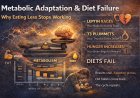
7. Metabolic Adaptation: The Hidden Constraint
Metabolic adaptation is one of the most underestimated variables in fat loss.
As calorie restriction continues, the body often adapts by:
- reducing NEAT (non-exercise activity thermogenesis)
- lowering thyroid output
- decreasing leptin
- increasing hunger signaling
This reduces total daily energy expenditure.
The more aggressive the deficit, the stronger the adaptation often becomes.
That matters for muscle retention because a more stressed, energy-conserving system increases the risk of sacrificing lean tissue.
Aggressive dieting may produce faster scale loss, but often with a higher lean-mass cost.
For a direct explanation of this process, see Metabolic Adaptation Explained.
| Adaptation | What Commonly Happens | Effect on a Cutting Phase |
|---|---|---|
| NEAT | Spontaneous movement drops | Total daily burn decreases |
| Leptin | Falls with fat loss | Hunger rises and expenditure may fall |
| Thyroid output | Can decrease | Metabolic rate slows |
| Appetite signaling | Gets stronger | Adherence becomes harder |
8. Where Thermogenic Supplements Fit Realistically
Thermogenic supplements usually increase energy expenditure modestly, often in the range of:
50–150 additional kcal per day
That is not dramatic.
It is incremental.
Over 12–16 weeks, small differences can matter, but only when the foundation is already in place.
Thermogenic compounds may:
- slightly increase energy expenditure
- improve perceived energy
- support appetite control in some users
But they do not override:
- poor protein intake
- lack of resistance training
- poor recovery
Their role is supportive, not foundational.
If you are evaluating one example in this category, see our CitrusBurn Review 2026.
9. Evidence-Based Macro Distribution During a Cut
An effective cutting structure for fat loss with muscle retention often looks like this:
Protein: 2.0–2.4 g/kg body weight
Fat: 20–30% of total calories
Carbohydrates: remaining calories
This works well because:
- high protein supports lean-mass retention
- moderate fat intake helps support hormonal function
- adequate carbohydrates help maintain training performance
Extremely low-carbohydrate cutting approaches may reduce training quality, which can indirectly increase muscle-loss risk.
| Macro | Typical Cutting Target | Main Function |
|---|---|---|
| Protein | 2.0–2.4 g/kg | Preserve muscle and improve satiety |
| Fat | 20–30% of calories | Support hormonal stability |
| Carbohydrates | Remaining calories | Support training output and recovery |
10. A Structured 12-Week Cutting Framework
Weeks 1–4:
Use a moderate deficit of roughly 15–20%. Focus on keeping strength as stable as possible.
Weeks 5–8:
Make small adjustments only if progress stalls. Monitor fatigue, hunger, and gym performance closely.
Weeks 9–12:
Use strategic refeeds or a short diet break if needed to reduce adaptation and improve adherence.
This phased structure can help:
- reduce hormonal strain
- improve adherence
- lower the risk of lean-mass loss
Consistency beats aggression.
11. Case Scenario: Two Different Approaches
Subject:
80 kg male, 20% body fat
Goal: lose 6 kg in 12 weeks
Aggressive Approach
- 1,000 kcal daily deficit
- 60 g protein per day
- 5–6 cardio sessions weekly
- reduced lifting intensity
Likely outcome:
- 6 kg scale loss
- significant lean-mass reduction
- greater metabolic slowdown
- higher rebound risk
Structured Approach
- 500 kcal daily deficit
- 170 g protein daily
- 4 resistance sessions weekly
- amino support around workouts if useful
- optional supportive supplementation
Likely outcome:
- slightly slower scale loss
- better lean-mass preservation
- better strength retention
- better long-term sustainability
The slower approach often produces the better physique outcome.
| Approach | Protein | Training | Likely Result |
|---|---|---|---|
| Aggressive | Low | Too much cardio, weaker lifting | Faster scale loss, worse body composition |
| Structured | High | Resistance training preserved | Better fat loss quality and retention |
```html
Related Guides and Supplement Reviews
If your goal is to lose body fat while preserving lean muscle mass, these evidence-based guides and supplement reviews may help you build a more complete strategy:
- Advanced Amino Formula Review – essential amino acid support for recovery, muscle maintenance, and workout performance.
- CitrusBurn Review – metabolism-support formula designed to complement structured fat-loss plans.
- Why Most Fat Burners Don't Work – learn how to evaluate fat-loss supplements more intelligently.
- Best Weight Loss Ebooks – science-based resources for sustainable fat loss.
- Best Muscle Building Ebooks – training and nutrition resources focused on preserving and building lean muscle mass.
```
12. Frequently Asked Questions
Can you lose fat without losing muscle?
Yes, when protein intake, resistance training quality, recovery, and deficit size are managed properly.
How much protein is required during a cut?
Research commonly supports about 1.6–2.4 g/kg body weight, with leaner or more aggressively dieting individuals often benefiting from higher intakes.
Do fat burners cause muscle loss?
No. Severe calorie restriction, low protein intake, and poor training structure are far more likely causes of muscle loss.
Should essential amino acids be used during a cut?
They can be useful in some cases, especially when peri-workout support helps, but they work best as secondary support rather than as a substitute for adequate total protein intake.
Why does aggressive dieting backfire so often?
Because it tends to increase fatigue, hunger, adaptation, and lean-mass loss, which makes both results and maintenance worse.
What is body recomposition?
Body recomposition refers to reducing body fat while preserving or improving lean muscle mass through structured nutrition, resistance training, and recovery.
Is cardio alone enough for fat loss?
Cardio can help increase calorie expenditure, but resistance training is usually far more important for preserving muscle during a cutting phase.
Can higher protein intake help preserve muscle?
Yes. Higher protein intake during calorie restriction may help support muscle protein synthesis, satiety, and lean-mass retention.
How quickly should you lose weight during a cut?
Moderate and sustainable fat loss is usually more effective for muscle retention than extremely aggressive dieting approaches.
13. Final Perspective
Fat loss without muscle loss is not about intensity.
It is about precision.
The hierarchy remains:
- calorie structure
- protein sufficiency
- progressive resistance training
- recovery optimization
- strategic supplementation
Most people reverse that order.
That is why many people lose muscle while dieting.
Structure first. Tools second.
If you want one example of a supportive thermogenic formula inside a properly structured cutting phase, see our full CitrusBurn Review 2026.