Carbohydrates & Insulin Explained | Performance Nutrition for Fat Loss

Understand how carbohydrates and insulin impact fat loss, muscle growth, and athletic performance. Evidence-based strategies for optimal metabolic nutrition.
 0  0
Carbohydrates & Insulin Explained | Performance Nutrition for Fat Loss
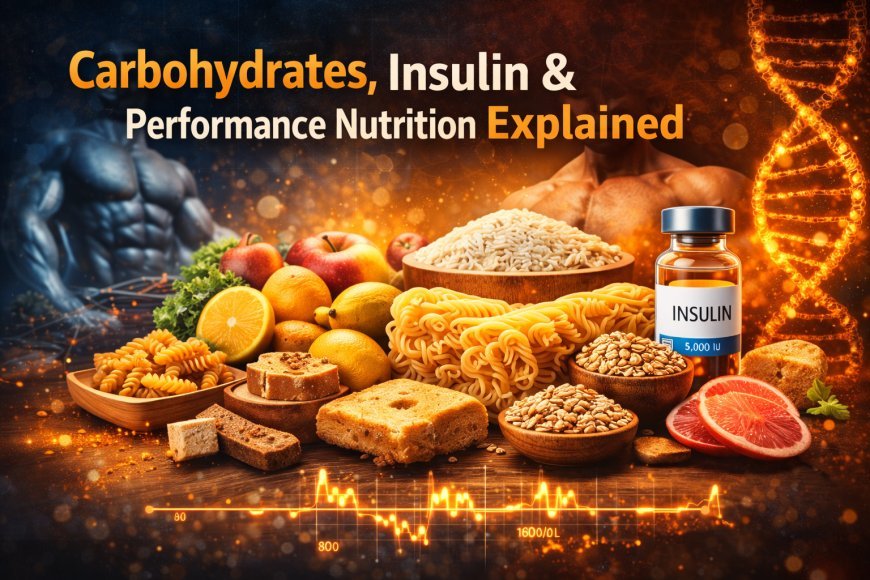
Carbohydrates & Insulin Explained Performance Nutrition for Fat Loss

Introduction: The Most Misunderstood Macronutrient

Carbohydrates have been demonized, worshipped, eliminated, reintroduced, and misunderstood for decades.

The common narrative:

“Insulin makes you fat.”

That statement is physiologically incomplete and strategically misleading.

Carbohydrates influence fat storage — yes.
But they also fuel performance, protect muscle mass, and regulate metabolic flexibility.

The real question is not:

“Are carbs good or bad?”

It is:

“How do carbohydrates and insulin function within energy balance and performance systems?”

This article completes the final pillar of our metabolic authority framework alongside:

  • (Internal link: Metabolic Nutrition Guide)

  • (Internal link: Calorie Deficit & Metabolic Adaptation)

  • (Internal link: Protein Intake for Fat Loss)


1. Carbohydrates: Biological Function

Carbohydrates are primarily stored as:

  • Glycogen in muscle

  • Glycogen in liver

Muscle glycogen fuels high-intensity training.
Liver glycogen regulates blood glucose stability.

Without adequate glycogen:

  • Training output declines

  • Fatigue increases

  • Muscle preservation becomes harder


2. Insulin: Storage Hormone or Anabolic Regulator?

Insulin is often labeled as a “fat storage hormone.”

That’s partially true — but incomplete.

Insulin also:

  • Stimulates glycogen storage

  • Inhibits muscle protein breakdown

  • Enhances amino acid uptake

It is not inherently fattening.
Chronic energy surplus is.


2.1 Insulin and Fat Gain: What the Evidence Shows

Hall et al. (2015) tested low-carb vs low-fat diets under controlled calorie conditions.
https://pubmed.ncbi.nlm.nih.gov/26278052/

Result:

Fat loss was similar when calories were equated.

Conclusion:

Insulin does not override energy balance.

Calories still matter.


3. Carbohydrates and Fat Loss

Can you lose fat on high-carb diets?

Yes — if in a calorie deficit.

Can you lose fat on low-carb diets?

Yes — if in a calorie deficit.

Difference lies in:

  • Appetite control

  • Training performance

  • Adherence

Carbohydrate reduction often reduces calories indirectly via appetite suppression — not magic insulin manipulation.


4. Glycogen and Training Performance

Resistance training and high-intensity exercise rely heavily on glycogen.

Low glycogen levels lead to:

  • Reduced strength

  • Reduced training volume

  • Increased perceived exertion

This matters because:

Training stimulus preserves muscle.

And muscle preservation protects resting metabolic rate — critical in fat loss phases.


4.1 Evidence on Carbohydrates and Performance

Burke et al. (2017) on carbohydrate availability and training adaptation:
https://pubmed.ncbi.nlm.nih.gov/28012184/

Key findings:

High-intensity performance declines when glycogen is chronically low.

Performance drives adaptation.

Adaptation drives body composition.


5. Low Carb vs High Carb: Contextual Decision

The debate is not binary.

Low-carb diets may:

  • Improve short-term water weight loss

  • Increase satiety in some individuals

  • Improve glycemic control in insulin-resistant populations

But for athletes or resistance-trained individuals:

Very low carbohydrate intake may reduce performance capacity.

Meta-analysis:
Johnston et al. (2014)
Low-carb vs low-fat weight loss outcomes are similar when calories are controlled.
https://pubmed.ncbi.nlm.nih.gov/25007189/

The real variable:

Adherence + performance sustainability.


6. Carb Timing for Fat Loss

Total daily intake matters more than timing.

However, carb timing for fat loss can optimize performance and recovery.


6.1 Pre-Workout Carbs

Improve:

  • Energy output

  • Strength performance

  • Training volume


6.2 Post-Workout Carbs

Support:

  • Glycogen replenishment

  • Recovery

Glycogen restoration improves subsequent training sessions.


7. Insulin Sensitivity and Metabolic Flexibility

Insulin sensitivity determines how effectively cells respond to insulin.

High insulin sensitivity:

  • Better glycogen storage

  • Less fat spillover

  • Improved nutrient partitioning

Exercise is one of the strongest enhancers of insulin sensitivity.

Hawley & Lessard (2008):
https://pubmed.ncbi.nlm.nih.gov/18025402/


7.1 Metabolic Flexibility

Metabolic flexibility = ability to switch between fat and carbohydrate oxidation.

Poor metabolic flexibility is associated with obesity and insulin resistance.

Good metabolic flexibility allows:

  • Efficient carb use during exercise

  • Efficient fat use at rest

Balanced macronutrient intake supports this adaptability.


8. Carbohydrates During Calorie Deficit

When dieting:

Reducing carbs may:

  • Lower insulin

  • Increase fat oxidation

But long-term fat loss still depends on:

Energy deficit magnitude.

Low glycogen can increase fatigue and reduce NEAT — indirectly slowing fat loss.

This connects directly with metabolic adaptation mechanisms explained here:
(Internal link: Calorie Deficit & Metabolic Adaptation)


9. Strategic Carb Cycling

Carb cycling alternates:

  • High carb days

  • Low carb days

Potential benefits:

  • Performance maintenance

  • Psychological adherence

  • Periodic leptin stimulation

Research is limited but suggests psychological and performance advantages rather than metabolic superiority.


10. Carbohydrates and Muscle Growth

Insulin plays a permissive role in muscle growth.

While protein drives muscle protein synthesis, insulin suppresses breakdown.

Staples et al. (2011):
https://pubmed.ncbi.nlm.nih.gov/21131864/

Findings:

Protein alone can maximize MPS; insulin enhances anti-catabolic effects.

Thus:

Carbohydrates are not required for hypertrophy — but they support training intensity.


11. When Low Carb Makes Sense

Low-carb approaches may be useful for:

  • Sedentary individuals

  • Insulin-resistant populations

  • Appetite control challenges

But for resistance-trained individuals seeking recomposition:

Moderate carb intake often yields better performance sustainability.


12. Practical Carb Recommendations

???? General Fat Loss

2–4 g/kg depending on activity level

???? Active Resistance Training

3–6 g/kg

???? Endurance Athletes

5–8 g/kg

Adjust based on:

  • Performance feedback

  • Hunger levels

  • Fat loss rate


13. Common Myths

❌ “Carbs stop fat burning.”
Fat oxidation fluctuates daily; fat loss depends on net energy balance.

❌ “Insulin spikes cause fat gain.”
Chronic caloric surplus causes fat gain.

❌ “Low carb is superior for everyone.”
Individual response varies.


14. Integration Into the Full Metabolic System

Carbohydrates must be viewed within:

  • Energy balance physiology

  • Protein intake for fat loss

  • Training stimulus

  • Metabolic adaptation control

Full system here:
(Internal link: Metabolic Nutrition Guide)

Carbs fuel performance.
Performance preserves muscle.
Muscle preserves metabolism.
Metabolism governs sustainable fat loss.


Key Takeaways

  1. Carbohydrates and insulin do not override calorie balance.

  2. Carbs fuel performance and protect training output.

  3. Insulin supports glycogen storage and reduces muscle breakdown.

  4. Carb timing can optimize training quality.

  5. Low-carb and high-carb diets both work — context determines suitability.

  6. Performance sustainability matters more than macronutrient dogma.


Scientific References

Hall KD et al. (2015). Energy expenditure and low-carb vs low-fat diets.
https://pubmed.ncbi.nlm.nih.gov/26278052/

Burke LM et al. (2017). Carbohydrate availability and training adaptation.
https://pubmed.ncbi.nlm.nih.gov/28012184/

Johnston BC et al. (2014). Low-carb vs low-fat weight loss comparison.
https://pubmed.ncbi.nlm.nih.gov/25007189/

Hawley JA & Lessard SJ. (2008). Exercise and insulin sensitivity.
https://pubmed.ncbi.nlm.nih.gov/18025402/

Staples AW et al. (2011). Insulin and muscle protein synthesis.
https://pubmed.ncbi.nlm.nih.gov/21131864/

What's Your Reaction?

like

dislike

love

funny

angry

sad

wow

Fitness Expert The Fitness Book is a comprehensive guide to health and fitness. This site provides a wide range of information from training programs to tips, motivational strategies and exercise techniques.