Evidence-Based Fat Loss Nutrition: Calories, Hormones & Metabolic Optimization
A complete science-backed guide to fat loss nutrition. Learn how calorie deficit, metabolic adaptation, protein intake, hormones, and carb timing influence sustainable fat loss and muscle retention.
From Calories to Hormonal Optimization
Introduction: Why Most Fat Loss Advice Fails
Most fat loss advice reduces everything to “eat less, move more.”
Technically correct. Practically incomplete.
Fat loss nutrition is not just about calories. It also involves:
- energy balance
- hormonal response
- metabolic adaptation
- muscle preservation
- adherence
Without understanding these layers, many people lose weight and then regain it.
The goal is not short-term weight loss.
The goal is sustainable fat loss with metabolic stability.
1. The Foundation: Calorie Deficit (But Not Blind Restriction)
Let’s be clear: you cannot lose body fat without a calorie deficit.
Energy balance research consistently supports this principle, including work on dynamic models of energy balance.
But this is where many people fail: they treat a calorie deficit like punishment instead of a controlled intervention.
For a more detailed breakdown of metabolic slowdown during dieting, read our guide to calorie deficit and metabolic adaptation.
Optimal Deficit Range
Research generally suggests:
- 10–25% deficit: more sustainable for most people
- 30%+ deficit: higher risk of metabolic adaptation and reduced adherence
Aggressive deficits increase the risk of:
- muscle loss
- hormonal disruption
- stronger hunger signals
- fatigue
For a deeper explanation of how metabolic adaptation slows progress, see our The Science of Calorie Deficit & Metabolic Adaptation.
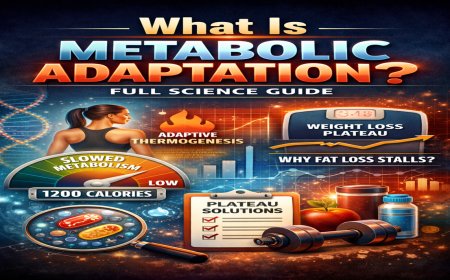
2. Metabolic Adaptation: The Hidden Resistance
When you diet:
- NEAT decreases
- thyroid output may decrease
- leptin drops
- ghrelin rises
This is called metabolic adaptation.
Research has shown that energy expenditure can decrease beyond what would be expected from weight loss alone.
This does not mean your metabolism is “broken.” It means your body is adapting to survive.
The common mistake is cutting calories even harder in response.
That often accelerates adaptation.
A smarter approach includes:
- a moderate deficit
- high protein intake
- resistance training
- planned diet breaks
3. Protein: The Anchor of Fat Loss
If there is one macronutrient that protects your physique during dieting, it is protein intake for fat loss.
Protein helps by:
- preserving lean mass
- increasing satiety
- providing the highest thermic effect of food
Research suggests higher protein intake supports muscle retention during calorie restriction.
For a complete scientific explanation of optimal intake ranges, read our Optimal Protein Intake for Fat Loss & Muscle Preservation.
A practical target for many people is 1.6–2.4 g/kg of body weight.
For a full breakdown of intake targets and meal distribution, see our protein intake guide.
Without adequate protein, fat loss can easily turn into muscle loss.
That makes long-term metabolic maintenance much harder.
4. Carbohydrates, Insulin & Performance
Carbohydrates are widely misunderstood.
Insulin is not automatically the enemy.
Insulin and fat storage are highly context dependent.
When you are in a calorie deficit, insulin does not prevent fat loss.
What carbohydrates strongly affect is:
- training performance
- glycogen replenishment
- cortisol response
- diet adherence
To explore the full relationship between insulin, glycogen, and performance, read our Carbohydrates, Insulin & Performance Nutrition Guide.
Research also suggests carbohydrate timing can improve high-intensity training performance.
Low-carb can be a useful tool in some situations, but it is not a requirement for fat loss.
5. Dietary Fat: Hormonal Stability
Fat intake influences several important functions, including:
- testosterone production
- estrogen balance
- absorption of fat-soluble vitamins
Extremely low-fat diets may negatively affect endocrine function and overall adherence.
A practical baseline for many people is 0.6–1.0 g/kg of body weight.
Cutting fats too low may contribute to:
- mood issues
- hormonal dysregulation
- reduced dietary adherence
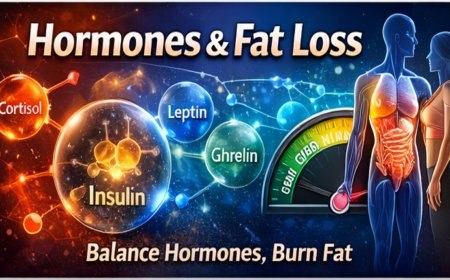
6. Leptin, Ghrelin & Hunger Regulation
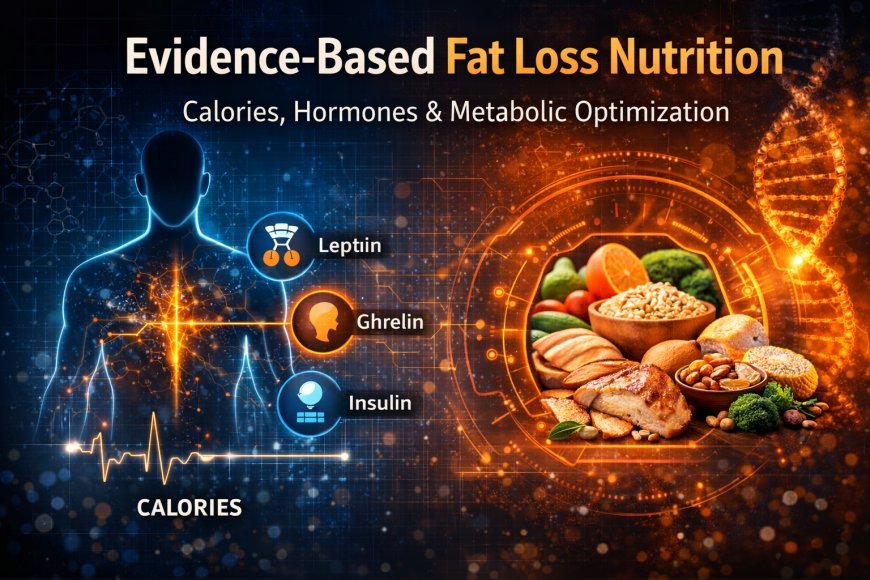
During dieting, leptin tends to decrease while ghrelin tends to rise.
This increases hunger and can reduce energy expenditure.
This is one reason fat loss becomes harder over time. It is not just about willpower.
Research suggests these hormonal changes can persist after weight loss.
That is why hunger management matters so much.
Helpful strategies include:
- higher protein intake
- higher fiber intake
- adequate sleep
- strategic refeed days when appropriate
7. Diet Breaks & Refeed Strategy
Continuous dieting increases metabolic and psychological stress.
Planned diet breaks may help:
- improve adherence
- temporarily raise leptin
- reduce psychological fatigue
Evidence from intermittent energy restriction research suggests diet breaks may preserve resting energy expenditure better than continuous dieting in some cases.
A simple example structure might be:
- 8 weeks in a calorie deficit
- 1–2 weeks at maintenance calories
This is strategic dieting, not yo-yo dieting.
8. Micronutrients: The Overlooked Variable
Micronutrient deficiency during dieting can increase:
- fatigue
- cravings
- immune suppression
Important nutrients to monitor include:
- magnesium
- zinc
- vitamin D
- iron, especially in some women
A calorie deficit built on poor nutrient density creates unnecessary metabolic stress.
9. Resistance Training: Non-Negotiable
Without resistance training, weight loss does not always equal fat loss.
It often becomes a mix of fat loss and muscle loss.
Muscle retention supports:
- resting metabolic rate
- insulin sensitivity
- long-term body composition
Fat loss without strength training is often incomplete.
10. Sustainable Fat Loss Framework
True evidence-based weight loss usually requires:
- a moderate calorie deficit
- high protein intake
- smart carbohydrate timing
- adequate fat intake
- resistance training
- sleep optimization
- strategic diet breaks when needed
This is not extreme dieting.
This is metabolic management.
Final Truth
Fat loss is not about hacks.
It is about understanding biological systems and building a structure you can actually sustain.
Most people fail because they:
- diet too aggressively
- ignore protein
- fear carbohydrates unnecessarily
- skip resistance training
- chase novelty instead of consistency
The same principle applies to results: system beats shortcuts.