Metabolic Nutrition Guide | Optimizing Fat Loss & Muscle Growth
Explore evidence-based metabolic nutrition strategies to enhance fat loss, preserve muscle, and support performance — backed by research and practical planning.
Introduction: Rewriting the Rulebook on Nutrition
For years, people have heard simplistic advice like:
“Just eat less to lose weight.”
And:
“If you want muscle, eat more protein.”
But real body composition change — losing fat while maintaining or growing muscle — is far more complex. True progress requires aligning calorie balance with nutrient quality, hormonal responses, and metabolic behavior.
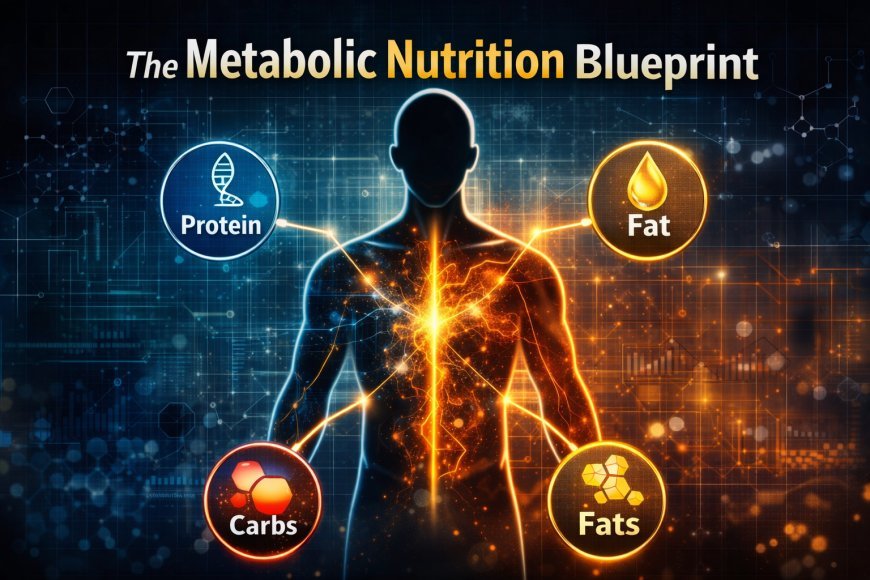
This guide unifies these processes under one evidence-based framework called metabolic nutrition — a system that prioritizes long-term fat loss without sacrificing strength or performance.
1. Energy Balance: The Physiological Foundation
At the most fundamental level, fat loss requires a calorie deficit — energy out must exceed energy in. However, this is a dynamic, not static, system.
Research shows that when individuals lose body weight, energy expenditure declines more than would be expected based on weight loss alone, a phenomenon known as adaptive thermogenesis (adaptive metabolic reduction) [turn0search1][turn0search9]. That means:
Your metabolism adjusts downward as weight drops. This makes further fat loss progressively harder.
1.1 How Metabolism Adjusts
Metabolic adaptation involves multiple components:
-
Resting Metabolic Rate (RMR) decreases
-
Non-Exercise Activity Thermogenesis (NEAT) declines
-
Thermic Effect of Food (TEF) changes with nutrient quality
-
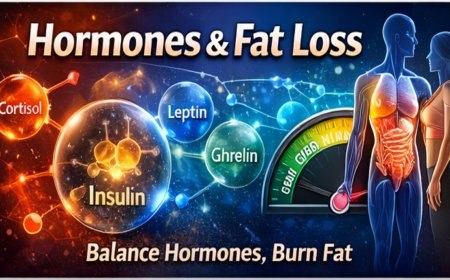
Hormones, such as leptin and thyroid hormones, shift in response to decreased energy intake [turn0search1]
These changes are not signs of failure — they’re survival mechanisms.
If you want to understand why fat loss eventually stalls and how your nutrition plan must adapt accordingly, read our full hub on The Fat Loss Paradox here. (Internal link: metabolic adaptation hub)
2. Thermic Effect of Food: Your Diet’s Hidden Engine
Every macronutrient requires energy to digest, absorb, and metabolize. This is known as the Thermic Effect of Food (TEF).
-
Protein has the highest thermogenic cost (~20–30% of calories)
-
Carbohydrates ~5–10%
-
Fat ~0–3%
This means that calories consumed as protein result in more energy used during digestion compared with carbs or fat, contributing to higher daily energy expenditure [turn0search4].
This effect is part of the reason protein-rich diets can support sustained fat loss — they boost metabolism passively while also promoting satiety and lean tissue support.
3. Protein: The Metabolic Master Macronutrient
Protein stands out among macronutrients for several reasons:
-
It increases satiety
-
It supports muscle maintenance
-
It has a high thermogenic cost
-
It influences body composition favorably
A critical review of high-protein diets shows that increased protein consumption enhances thermogenesis and satiety, assisting fat loss compared to lower-protein diets [turn0search8].
3.1 Optimal Protein Levels
While traditional guidelines (0.8 g/kg/day) meet minimum requirements, body composition goals demand more:
-
1.6–2.2 g/kg/day for fat loss with muscle preservation
-
Some research suggests even higher intakes may help maintain RMR after weight loss [turn0search0]
These protein levels support muscle protein synthesis and help blunt the metabolic adaptation that often follows dieting.
3.2 Protein Timing & Distribution
Consuming protein evenly across meals (e.g., 25–40g per meal) can maximize muscle protein synthesis, keep hunger lower, and sustain metabolic efficiency across the day.
This strategy also supports training performance and recovery, crucial for long-term compliance and adaptation.
4. Carbohydrates & Performance: Context Matters
Carbohydrates often get a bad reputation in weight management circles, but the evidence is clear:
-
Carbs are the preferred fuel for high-intensity exercise
-
They replenish glycogen
-
They support training volume, which enables muscle maintenance or growth while dieting
Focusing solely on low-carb dieting can reduce performance and increase fatigue, making it harder to maintain metabolic rate and training quality.
For individuals with higher activity levels, prioritizing strategic carbohydrate timing around workouts can support performance while still facilitating fat loss.
For example:
-
Higher carb around training
-
Lower carb on rest days
This approach balances fuel needs with metabolic control.
5. Dietary Fat & Hormonal Health
Dietary fats are essential — not optional. Fats provide energy density and support:
-
Hormone production (e.g., testosterone, estrogen)
-
Cell membrane integrity
-
Fat-soluble vitamin absorption
Some research suggests that dietary fat composition (quality of fats, not just amount) is correlated with metabolic function and satiety. However, fat’s role should be contextualized within overall energy balance and carbohydrate tolerance.
For a deeper exploration of how macronutrient ratios influence metabolic signaling, see research on ketogenic and low-carbohydrate metabolic effects [turn0search10].
6. Putting It Together: The 5-Step Metabolic Nutrition Strategy
To apply metabolic nutrition in practice, follow this system:
1. Establish a Moderate Deficit
Too aggressive a deficit increases metabolic adaptation. Aim for gradual changes that preserve lean tissue.
2. Prioritize Protein
Ensure consstent high-protein meals throughout the day.
3. Strategic Carbohydrate Timing
Use carbs to fuel workouts and prevent training quality drop.
4. Healthy Dietary Fats
Incorporate essential fats for hormonal balance and energy partitioning.
5. Track & Adjust
Measure progress, body composition, and energy levels — not just scale weight.
This structured approach reduces metabolic resistance and improves sustainability.
7. Common Myths & Misconceptions
❌ Myth: Eating late at night slows metabolism.
Evidence shows total daily intake and nutrient quality matter more than timing globally.
❌ Myth: All calories are equal.
Quantity matters but quality affects metabolic response and satiety, as shown in TEF differences.
❌ Myth: Low-carb is always best for fat loss.
Only contextually true depending on activity level and individual tolerance.
For more myths debunked, our Hub on Why Dieting Fails expands on these concepts. (Internal link: fat loss paradox hub)
8. Integrating Nutrition with Other Layers
Metabolic nutrition does not work in isolation:
✅ Fit it with structured resistance training (supports muscle retention)
✅ Implement recovery strategies (sleep, stress management)
✅ Apply strategic diet breaks (reduce adaptation)
— see article on Diet Breaks and Metabolism for details (Internal link: diet break article)
9. Summary
Metabolic nutrition is not a fad diet. It is a biological system:
-
Integrated with energy balance
-
Responsive to nutrient quality
-
Modifiable through behavior and tracking
-
Anchored in proven physiology research
Getting this foundation right — not just “eating less” — is key to sustainable results.
Key Studies & References
-
Adaptive thermogenesis and metabolic adaptation post-weight loss mechanisms (journal JISSN) [turn0search1]
-
Weight loss adaptive thermogenesis persisting up to 1 year (Obesity study) [turn0search9]
-
High-protein diets increase thermogenesis and satiety (critical review) [turn0search8]
-
Diet-induced thermogenesis and macronutrient energy cost (Nutrition & Metabolism) [turn0search4]
-
High protein intake may counteract adaptive thermogenesis after weight loss (PREVIEW study analysis) [turn0search0]
-
Effects of macronutrient metabolism on obesity and metabolic syndrome (Nutrition Journal) [turn0search7]
Internal Linking Plan (for this article)
Link to The Fat Loss Paradox Hub at key points to reinforce authority.
Link to Protein Intake article when discussing protein distribution.
Link to Carbohydrates & Insulin article when discussing performance and timing.
What's Your Reaction?