





















Fat Loss Plateau Explained: Why Weight Loss Stops and How to Fix It
Struggling with a weight loss plateau? Learn why fat loss stops during dieting and discover science-based strategies to restart progress safely.

Fat Loss Plateau Explained: Why Weight Loss Stops and How to Fix It
Many people begin a weight loss journey seeing encouraging progress in the first few weeks. The scale drops, clothes fit better, and motivation is high. However, after some time, the results often slow down or stop completely. This frustrating stage is commonly known as a fat loss plateau.
A plateau does not mean your diet has stopped working or that your body is “broken.” In most cases, it simply means your body has adapted to the changes you’ve made.
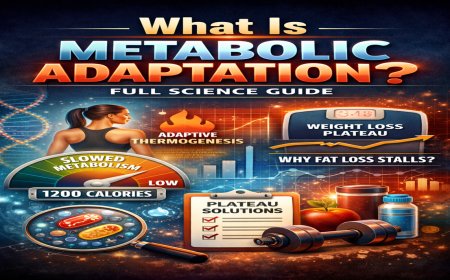
Understanding the science behind plateaus is essential for continuing progress. If you're unfamiliar with how the body adapts to calorie restriction, start with our guide on metabolic adaptation.
What Is a Fat Loss Plateau?
A fat loss plateau occurs when body weight stops decreasing despite continuing the same diet and exercise routine.
This usually happens because the body gradually adjusts its metabolism and energy expenditure as weight decreases.
During the early stages of dieting, calorie deficits are larger relative to body size. As weight drops, the body burns fewer calories, reducing the deficit.
Why Weight Loss Slows Over Time
There are several reasons why fat loss naturally slows during a diet:
- Reduced body mass requires fewer calories
- Metabolism adapts to conserve energy
- Hormones regulating hunger and energy change
- Daily movement may decrease subconsciously
- Muscle mass may decline if nutrition is inadequate
These physiological adjustments are normal and are part of the body’s survival mechanisms.
Learn more about this biological process in our article on why metabolism slows during weight loss.
Common Signs of a Weight Loss Plateau
A plateau is usually identified when body weight remains unchanged for several weeks despite consistent dieting.
- Weight remains stable for 2–4 weeks
- Fat loss measurements stop decreasing
- Energy levels feel lower
- Hunger becomes more noticeable
It’s important to distinguish between a true plateau and normal short-term fluctuations caused by water retention or hormonal changes.
The Role of Energy Balance
Fat loss ultimately depends on energy balance—the relationship between calories consumed and calories burned.
As body weight decreases, total daily energy expenditure also decreases. This means the calorie deficit that once produced steady fat loss may gradually disappear.
When calorie intake matches calorie expenditure again, weight loss stops.
Hormones and Weight Loss Plateaus
Hormonal changes during dieting can also contribute to plateaus.
Several hormones are involved in appetite regulation and metabolism:
- Leptin
- Ghrelin
- Thyroid hormones
- Cortisol
These hormonal adjustments can increase hunger and reduce energy expenditure.
You can explore this topic further in our article about hormones and fat loss.
How Long Do Plateaus Last?
Weight loss plateaus can last anywhere from a few weeks to several months depending on diet strategy, activity level, and individual metabolism.
In many cases, the plateau simply indicates that your body has reached a new energy balance and requires adjustments to continue progressing.
Science-Based Ways to Break a Fat Loss Plateau
1. Recalculate Calorie Needs
Because your body weight has changed, your daily calorie needs are now lower than when you started dieting.
Adjusting calorie intake slightly can restore the deficit needed for continued fat loss.
2. Increase Daily Activity
Increasing daily movement can help increase calorie expenditure. This includes:
- walking
- light cardio
- increasing step count
- adding short activity sessions
3. Prioritize Strength Training
Resistance training helps maintain lean muscle mass during dieting. Muscle tissue plays a critical role in maintaining metabolic rate.
4. Optimize Protein Intake
Higher protein intake helps preserve muscle and supports satiety during calorie restriction.
For detailed recommendations see our guide on optimal protein intake for fat loss.
5. Use Structured Diet Breaks
Some research suggests that temporary diet breaks can help improve adherence and potentially support metabolic recovery during long dieting phases.
Read more in our article on diet break strategies.
6. Improve Sleep Quality
Sleep plays a major role in appetite regulation and metabolic health.
Insufficient sleep can increase hunger hormones and make dieting significantly harder.
Learn more about the connection between rest and body composition in our guide to sleep and weight loss.
When Plateaus Are Actually Progress
Sometimes a plateau does not mean fat loss has stopped. Body composition changes can occur even when scale weight remains stable.
For example, fat loss combined with muscle gain can keep weight stable while body shape improves.
Tracking measurements, strength progress, and clothing fit can provide better insight than scale weight alone.
Related Reading
- What Is Metabolic Adaptation?
- Why Metabolism Slows During Weight Loss
- Diet Break Strategy
- Reverse Dieting Explained
Final Takeaway
A fat loss plateau is a normal part of the weight loss process rather than a sign of failure. As the body adapts to lower calorie intake and reduced body mass, progress may temporarily slow.
By understanding the biological mechanisms behind plateaus and applying strategic adjustments—such as recalculating calorie needs, maintaining muscle mass, improving sleep, and incorporating diet breaks—you can continue progressing toward long-term fat loss goals.
What's Your Reaction?