How to Restore Gut Microbiome Naturally (Science-Based Guide)
Learn how to restore gut microbiome naturally with science-based strategies including diet, lifestyle changes, and microbiome support supplements.
How to Restore Gut Microbiome Naturally (Science-Based Guide)
The gut microbiome plays a critical role in digestion, immunity, metabolism, and even mental health. When gut bacteria become imbalanced, it can lead to digestive discomfort, inflammation, fatigue, and other health issues.
The good news is that the gut microbiome is highly adaptable. With the right nutrition, lifestyle habits, and targeted supplements, it is possible to restore microbiome balance and support long-term digestive health.
This science-based guide explains how to restore gut microbiome naturally and what steps can help rebuild a healthy gut ecosystem.
If you are new to this topic, start with our gut microbiome health guide. If you already have symptoms, read our microbiome imbalance symptoms guide first.
Table of Contents
- What Is the Gut Microbiome?
- Why Gut Microbiome Balance Matters
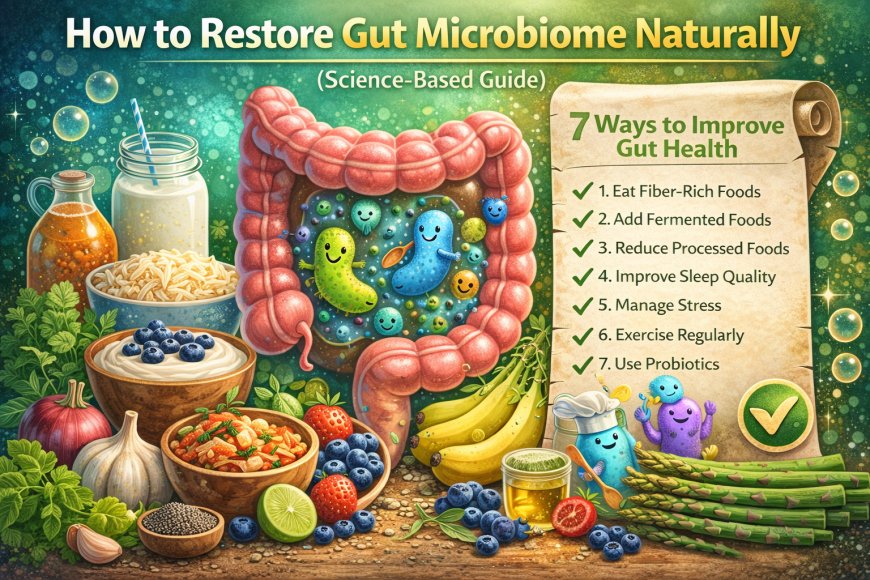
- 7 Science-Based Ways to Restore Gut Microbiome
- Best Foods for Gut Bacteria
- Lifestyle Habits That Support Gut Health
- Do Gut Supplements Work?
- Pros & Cons
- Related Gut Health Guides
- FAQ
Support Your Gut Microbiome
Modern microbiome supplements are designed to support beneficial gut bacteria and digestive balance.
- ✔ Promote healthy gut bacteria
- ✔ Improve digestion
- ✔ Reduce bloating
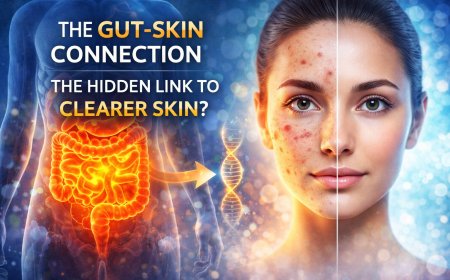
- ✔ Support gut-skin connection
What Is the Gut Microbiome?
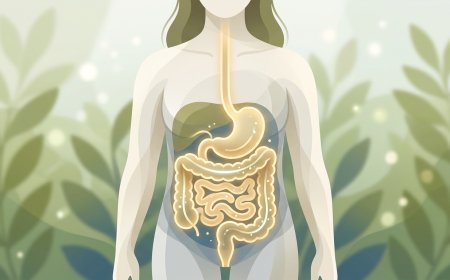
The gut microbiome is a complex community of trillions of microorganisms living in the digestive system. These microorganisms include bacteria, fungi, and viruses that help regulate digestion and protect the body from harmful pathogens.
When beneficial microbes dominate the gut ecosystem, digestion becomes more efficient and the immune system functions more effectively.
However, an imbalance known as gut dysbiosis occurs when harmful bacteria begin to outnumber beneficial ones.
Learn more about common microbiome imbalance symptoms.
Why Gut Microbiome Balance Matters
A healthy gut microbiome affects many areas of overall health.
Digestive Health
Gut bacteria help break down complex carbohydrates and fiber, improving digestion.
If digestion is your main concern, read our guide on how to improve digestion naturally.
Immune System
Approximately 70% of the immune system is located in the gut.
Mental Health
The gut-brain axis allows communication between the digestive system and the brain.
Inflammation Control
A balanced microbiome helps regulate inflammatory responses.
Metabolism and Weight Management
Gut health may also influence appetite signals, nutrient absorption, inflammation balance, and metabolic health.
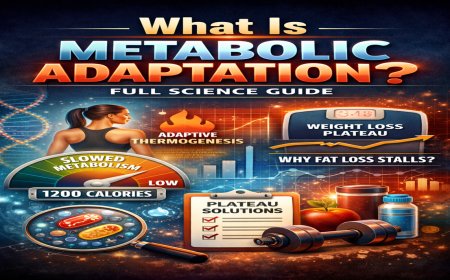
For a wider view, read gut health and weight loss explained, metabolic health guide, and science-based weight loss guide.
7 Science-Based Ways to Restore Gut Microbiome
1. Increase Fiber Intake
Fiber is one of the most important nutrients for gut bacteria. Beneficial microbes feed on fiber and produce short-chain fatty acids that support gut health.
Good sources include:
- Vegetables
- Whole grains
- Beans and legumes
- Fruits
2. Eat Fermented Foods
Fermented foods contain beneficial probiotics that help repopulate gut bacteria.
- Yogurt
- Kefir
- Sauerkraut
- Kimchi
- Kombucha
3. Reduce Processed Foods
Highly processed foods and refined sugar may disrupt the gut microbiome.
4. Improve Sleep Quality
Poor sleep patterns can negatively affect gut bacteria diversity.
Sleep also supports appetite control, recovery, and long-term metabolic health. Learn more in our sleep and weight loss guide.
5. Manage Stress
Chronic stress can disrupt gut-brain communication and influence gut microbiome balance.
6. Exercise Regularly
Regular physical activity may improve gut microbial diversity.
7. Use Targeted Gut Supplements
Many people use microbiome supplements to support gut bacteria balance and digestive health.
Read our detailed Prime Biome review to learn how microbiome supplements support gut and skin health.
You can also compare related options in our Biome vs other gut health supplements guide and our Renew Ritual gut health benefits article.
Best Foods for Gut Bacteria
Nutrition is one of the most powerful ways to restore the gut microbiome.
For a deeper food list, read our full guide to the best foods for gut bacteria.
Prebiotic Foods
- Garlic
- Onions
- Bananas
- Asparagus
- Oats
Polyphenol-Rich Foods
- Berries
- Green tea
- Dark chocolate
- Olive oil
Fermented Foods
Fermented foods introduce beneficial bacteria into the digestive system.
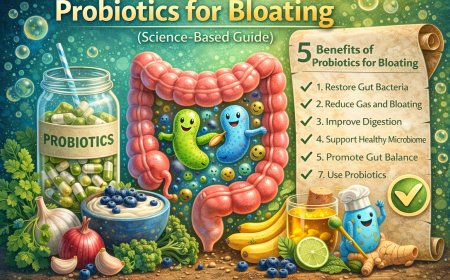
If bloating is a common issue, see our guide on probiotics for bloating.
Lifestyle Habits That Support Gut Health
Several daily habits can influence the diversity of the gut microbiome.
- Eat a diverse diet
- Stay hydrated
- Reduce chronic stress
- Maintain regular sleep cycles
- Avoid unnecessary antibiotics
Small daily habits matter. Restoring the microbiome usually requires consistency, not perfection.
Do Gut Supplements Work?
Many supplements aim to support the gut microbiome by introducing beneficial bacteria and nutrients that promote microbial diversity.
Common ingredients found in gut health supplements include:
- Probiotics
- Prebiotic fiber
- Digestive enzymes
- Polyphenols
Some advanced formulas focus on the gut-skin connection and microbiome balance.
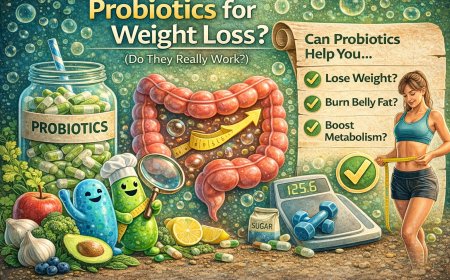
For more supplement context, read probiotics for weight loss and best probiotic supplements for weight loss.
Restore Your Gut Microbiome
Discover supplements designed to support microbiome balance and digestive health.
Pros & Cons
Pros
- Supports long-term digestive health
- Improves gut bacteria diversity
- May reduce inflammation
- Can improve energy levels
Cons
- Results may take several weeks
- Requires consistent lifestyle changes
- Dietary adjustments may be necessary
Related Gut Health Guides
Use these related guides to build a stronger gut health routine:
- Gut Microbiome Health Guide
- Microbiome Imbalance Symptoms
- Improve Digestion Naturally
- Best Foods for Gut Bacteria
- Best Probiotics for Bloating
- Probiotics for Weight Loss
- Prime Biome Review
- Renew Ritual Gut Health Benefits
FAQ
How long does it take to restore gut microbiome?
Gut bacteria balance can begin improving within a few weeks, but full restoration may take several months.
Can probiotics restore gut bacteria?
Probiotics may help support beneficial gut microbes, especially when combined with a healthy diet.
What foods improve gut microbiome?
Fiber-rich foods, fermented foods, and polyphenol-rich foods can help support gut bacteria diversity.
Does stress affect gut bacteria?
Yes. Chronic stress may negatively affect gut-brain communication and microbial diversity.
Can sleep affect gut microbiome health?
Yes. Poor sleep may negatively influence gut bacteria diversity, appetite hormones, inflammation, and digestive function.
Can gut microbiome affect weight loss?
Gut health may support weight management indirectly by influencing digestion, nutrient absorption, inflammation, appetite signals, and metabolic health.
What is the fastest way to support gut bacteria naturally?
The best approach is to eat more fiber-rich foods, include fermented foods, reduce processed foods, manage stress, sleep well, and stay consistent.