





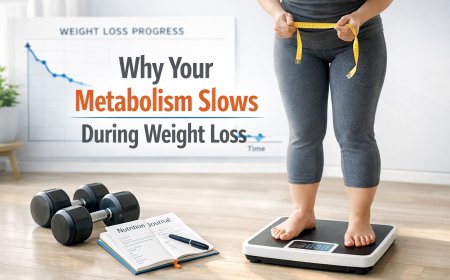












Why Metabolism Slows During Weight Loss (And How to Prevent It)
Discover why metabolism slows during weight loss, the science behind metabolic adaptation, and practical strategies to prevent plateaus and continue losing fat effectively.
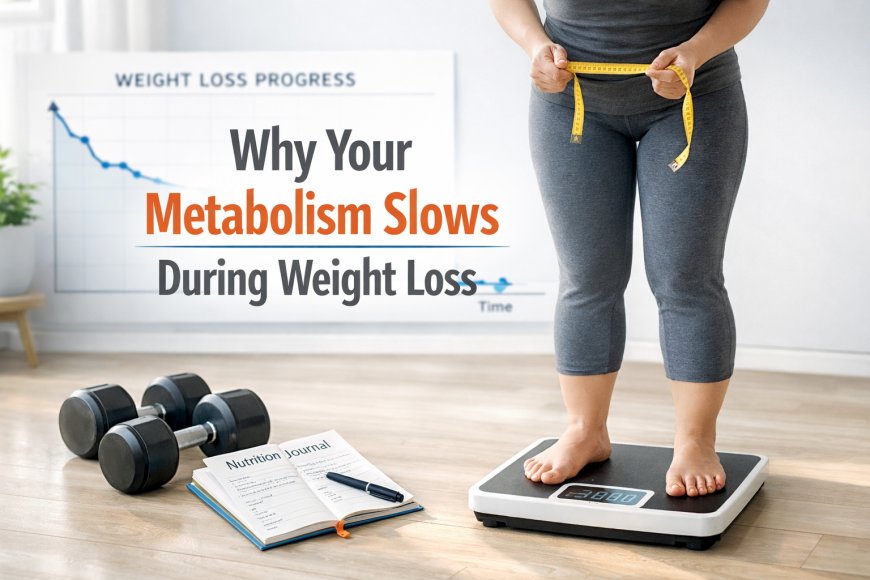
Why Metabolism Slows Down During Weight Loss (And What To Do About It)
Many people begin a weight loss journey expecting steady progress. At first, the scale moves quickly. Then something frustrating happens: weight loss slows down or stops completely.
This phenomenon is not simply a lack of discipline or effort. In many cases, the real cause is a biological response known as metabolic adaptation. As the body loses weight and senses an energy deficit, it naturally adjusts energy expenditure to conserve calories.
Understanding why metabolism slows during dieting is essential for building sustainable fat loss strategies and avoiding common plateaus.
If you are unfamiliar with the science behind this process, start with our full explanation of metabolic adaptation.
The Body’s Built-In Survival Mechanism
The human body evolved to survive periods of food scarcity. When calorie intake drops significantly, the body activates protective mechanisms designed to conserve energy.
This response helped humans survive historical famines, but in modern dieting it can make fat loss more difficult.
Key metabolic adjustments may include:
- Reduced resting metabolic rate
- Lower calorie burn during activity
- Changes in hunger hormones
- Increased appetite
- Reduced spontaneous movement
These changes are not a failure of willpower—they are normal physiological responses.
What Is Metabolic Adaptation?
Metabolic adaptation refers to the body's ability to lower its energy expenditure beyond what would be expected from weight loss alone.
For example, if someone loses 10 kilograms, their metabolism naturally decreases because a smaller body burns fewer calories. However, research shows the body often reduces calorie burn even further than predicted.
This means the body becomes more efficient with energy, making continued fat loss slower.
A detailed explanation can be found in our guide on metabolic adaptation.
Signs Your Metabolism May Be Slowing
Metabolic slowdown often appears gradually during a weight loss phase. Some common indicators include:
- Weight loss slowing despite consistent dieting
- Feeling colder than usual
- Increased hunger levels
- Lower workout energy
- Reduced motivation to move
- Persistent fatigue
These symptoms are part of the body's energy conservation response.
The Role of Hormones in Metabolic Slowdown
Hormones play a major role in regulating metabolism during weight loss.
Several important hormones are affected during prolonged calorie restriction:
- Leptin – decreases, increasing hunger
- Ghrelin – increases, stimulating appetite
- Thyroid hormones – may decrease metabolic rate
- Cortisol – can rise during stress or aggressive dieting
These hormonal shifts are discussed in more detail in our article on hormones and fat loss.
Why Rapid Dieting Makes the Problem Worse
Extremely aggressive calorie deficits often accelerate metabolic slowdown.
When the body senses a severe energy shortage, it increases its conservation response. This can lead to:
- loss of lean muscle mass
- lower metabolic rate
- stronger hunger signals
- higher risk of weight regain
This is why many modern fat loss strategies focus on sustainable deficits rather than extreme dieting.
Muscle Mass and Metabolic Rate
Muscle tissue burns more energy than fat tissue. During aggressive dieting, losing muscle mass can significantly reduce metabolism.
Protecting lean muscle is therefore essential for maintaining metabolic rate during fat loss.
Key strategies include:
- resistance training
- adequate protein intake
- moderate calorie deficits
Learn more about optimal protein intake in our guide on protein intake for fat loss.
How Diet Breaks Can Help Restore Metabolism
One strategy increasingly supported by research is the use of structured diet breaks.
A diet break temporarily increases calorie intake—often to maintenance levels—for a short period during a fat loss phase.
Potential benefits include:
- partial restoration of leptin levels
- improved training performance
- reduced psychological fatigue
- better long-term adherence
For a deeper explanation of this approach, see our article on diet break strategy.
The Role of Reverse Dieting
After extended dieting phases, gradually increasing calorie intake can help restore metabolic function.
This process—known as reverse dieting—aims to increase energy intake slowly while minimizing rapid fat gain.
Many athletes and physique competitors use reverse dieting to rebuild metabolic capacity after aggressive fat loss phases.
You can read more in our guide on reverse dieting explained.
The Importance of Sleep for Metabolic Health
Sleep is often overlooked in weight loss discussions, yet it plays a critical role in metabolic regulation.
Chronic sleep deprivation can:
- increase hunger hormones
- reduce insulin sensitivity
- impair fat loss
- increase cravings
Improving sleep quality is one of the simplest ways to support metabolism during dieting.
Learn more in our article on sleep and weight loss.
How Long Does Metabolic Adaptation Last?
Research suggests metabolic adaptation can persist for months or even years after significant weight loss.
However, this does not mean metabolism is permanently damaged.
With appropriate training, adequate nutrition, and structured dieting strategies, metabolic rate can gradually recover.
Practical Strategies to Prevent Metabolic Slowdown
While some metabolic adaptation is unavoidable during weight loss, several strategies can help reduce its impact.
- Use moderate calorie deficits instead of extreme dieting
- Prioritize resistance training
- Consume adequate dietary protein
- Include structured diet breaks
- Maintain healthy sleep habits
- Focus on long-term consistency
These approaches help support metabolic health while still allowing steady fat loss.
Frequently Asked Questions
Is metabolic slowdown permanent?
No. While metabolism can remain suppressed for some time after significant weight loss, it can recover through proper nutrition, training, and metabolic restoration strategies.
Does metabolism always slow during dieting?
Some reduction in metabolic rate is normal because a smaller body requires fewer calories. However, the extent of metabolic adaptation varies depending on diet strategy and lifestyle factors.
Can exercise prevent metabolic slowdown?
Resistance training can help preserve lean muscle mass, which plays a major role in maintaining metabolic rate during weight loss.
Related Reading
- What Is Metabolic Adaptation?
- Fat Loss Plateau Explained
- Diet Break Strategy
- Reverse Dieting Explained
Final Takeaway
Metabolic slowdown during weight loss is a natural biological response designed to protect the body from energy shortages. Understanding this process allows you to design smarter fat loss strategies that work with your physiology rather than against it.
By prioritizing sustainable dieting, resistance training, adequate protein intake, and strategic diet breaks, it is possible to continue making progress while protecting long-term metabolic health.
What's Your Reaction?