Metabolism Explained Simply: Why Your Body Burns Fat or Stores It
Understand how metabolism really works, why your body stores fat, and what affects fat burning. A simple, realistic guide for weight loss and energy.
Quick Answer
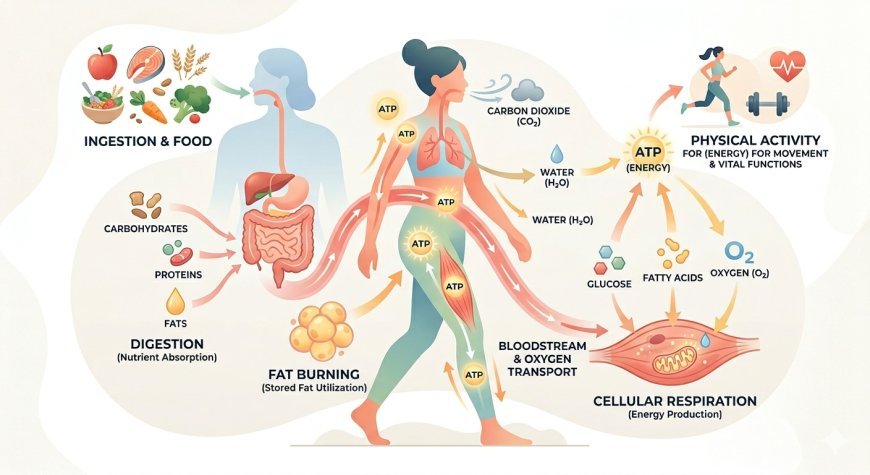
Metabolism is the process your body uses to turn food into energy and decide whether to use or store that energy.
It affects:
- Fat loss
- Energy levels
- Hunger and cravings
- Body weight
- Recovery
- Daily performance
Most importantly, metabolism is not broken.
It is adaptive.
That means your body constantly responds to your food intake, activity, sleep, stress, and lifestyle habits.
Confused About Why Fat Loss Feels So Hard?
Many people assume they have a "broken metabolism."
But in reality, metabolism adapts to sleep, stress, calorie intake, movement, and long-term habits.
Understanding these factors helps you build a more sustainable fat-loss strategy. Learn About Metabolic Adaptation
Table of Contents
- What Does Metabolism Mean?
- Why Your Body Burns Fat or Stores It
- The Main Parts of Metabolism
- Basal Metabolic Rate (BMR)
- Physical Activity
- Thermic Effect of Food
- NEAT and Daily Movement
- Why Fat Loss Feels Slow
- Metabolic Adaptation
- Cellular Energy
- Gut Health and Metabolism
- Sleep and Metabolism
- Common Metabolism Mistakes
- FAQ
What Does Metabolism Mean?
Metabolism is the process your body uses to convert food into energy.
This energy supports:
- Breathing
- Digestion
- Body temperature
- Hormone production
- Movement
- Cell repair
Even when you are sleeping, your body continues to burn energy.
That is why metabolism is far more than simply "burning calories."
Why Your Body Burns Fat or Stores It
Your body constantly decides:
- Should energy be used now?
- Or stored for later?
This process depends on:
- Food intake
- Hormones
- Sleep quality
- Stress levels
- Activity patterns
- Long-term habits
When energy intake consistently exceeds energy needs, fat storage becomes more likely.
When energy demands exceed intake, your body may begin using stored energy.
However, real life is rarely this simple because hunger, sleep, stress, and behavior influence consistency.
The Main Parts of Metabolism
Total daily energy expenditure consists of several components.
Understanding these helps explain why metabolism varies from person to person.
1. Basal Metabolic Rate (BMR)
BMR represents the calories your body burns simply to stay alive.
It supports:
- Breathing
- Circulation
- Body temperature
- Cell repair
For many people, BMR accounts for the largest portion of total calorie expenditure.
2. Physical Activity
Exercise and movement increase daily energy expenditure.
Walking, strength training, sports, and daily movement all contribute.
Activity levels often influence fat loss more than people realize.
3. Thermic Effect of Food (TEF)
Digesting food itself requires energy.
Protein generally requires more energy to digest compared to carbohydrates and fats.
Learn more:
4. NEAT (Non-Exercise Activity Thermogenesis)
NEAT refers to the calories burned during everyday movement.
Examples include:
- Walking around the house
- Standing
- Cleaning
- Fidgeting
- Daily chores
Small movements performed consistently may have a surprisingly large impact over time.
Why Fat Loss Feels Slow for Many People
Fat loss usually slows because the body adapts.
As weight changes, energy needs often decrease.
At the same time:
- Hunger may increase.
- Energy may decline.
- Daily movement may decrease.
- Consistency becomes harder.
This is one reason extreme diets often fail.
Sustainable habits usually outperform aggressive approaches.
Want to Understand Why Progress Slows?
Many people blame themselves when fat loss slows down.
In reality, metabolic adaptation is completely normal. Read More
Metabolic Adaptation
One of the biggest misconceptions about metabolism is the belief that it becomes permanently "damaged."
In reality, metabolism is adaptive.
When calories decrease for a long time, your body may respond by:
- Reducing energy expenditure
- Increasing hunger
- Lowering spontaneous movement
- Conserving energy
This response is normal.
Your body is trying to protect itself.
Related guide:
Metabolic Adaptation Explained
Cellular Energy and Metabolism
Metabolism exists at the cellular level.
Every cell in your body requires energy.
That energy supports:
- Recovery
- Movement
- Brain function
- Hormone production
- Daily performance
This is one reason many people researching metabolism become interested in mitochondrial and cellular energy support.
Example:
Supplements may support routines, but they cannot replace sleep, nutrition, and movement.
Fat Gain vs Water Retention
Not every increase on the scale represents body fat.
Body weight can fluctuate because of:
- Water retention
- Sodium intake
- Carbohydrate intake
- Stress
- Sleep quality
- Hormonal changes
This explains why someone can feel bloated or heavier without actually gaining fat.
Understanding the difference helps reduce unnecessary frustration.
Gut Health and Metabolism
Digestion and metabolism are closely connected.
Gut health influences:
- Nutrient absorption
- Appetite signals
- Bloating
- Inflammation
- Eating consistency
Poor digestion may indirectly make weight management more difficult.
Helpful resources:
Blood Sugar and Weight Control
Blood sugar regulation can influence:
- Energy levels
- Cravings
- Appetite
- Consistency
Large fluctuations may increase hunger and make fat loss harder.
Related reviews:
Sleep and Metabolism
Sleep is one of the most underestimated factors in weight management.
Poor sleep may influence:
- Hunger hormones
- Cravings
- Recovery
- Stress levels
- Daily energy
When sleep quality declines, consistency often becomes more difficult.
Helpful guides:
Common Metabolism Mistakes
Many people unintentionally slow their progress through habits rather than biology.
Common mistakes include:
- Expecting fast results
- Eating too little
- Ignoring sleep
- Overtraining
- Drinking too little water
- Changing plans too frequently
- Relying entirely on supplements
Metabolism responds to long-term patterns.
Not to one perfect day.
Looking for a Simpler Metabolism Strategy?
Small habits repeated consistently often outperform extreme approaches.
Many readers start by understanding metabolism before exploring structured support options. Learn More
What Actually Supports Metabolism?
Most people search for ways to "boost metabolism."
But sustainable metabolism support usually comes from simple habits—not extreme tricks.
The strongest foundations include:
- Eating enough protein
- Walking regularly
- Strength training
- Improving sleep quality
- Managing stress
- Staying hydrated
- Avoiding aggressive dieting
- Building routines you can maintain
The best metabolism plan is not the most complicated one.
It is the one you can actually follow.
Final Thoughts
Your metabolism is not broken.
It is adaptive.
It responds to:
- Food intake
- Movement
- Sleep
- Stress
- Hormones
- Long-term habits
Understanding this changes everything.
Instead of chasing random tricks, you begin building a system.
And systems create long-term results.
Results vary from person to person.
But consistency almost always matters more than intensity.
Scientific References and Authority Sources
- National Institutes of Health (NIH)
- PubMed Research Database
- Harvard T.H. Chan School of Public Health
- Centers for Disease Control and Prevention (CDC)
- National Heart, Lung, and Blood Institute
Related Guides
- Metabolic Adaptation Explained
- Sleep and Fat Loss Guide
- Gut Health and Weight Loss Explained
- Optimal Protein Intake Guide
- Carbohydrates and Insulin Explained
- Science-Based Weight Loss Guide
Related Reviews
- Mitolyn Review
- Java Burn Review
- Aqua Sculpt Review
- LeanBiome Review
- Nagano Tonic Review
- GlucoTrust Review
Frequently Asked Questions
What is metabolism in simple terms?
Metabolism is the process your body uses to convert food into energy.
Can you boost metabolism naturally?
Yes. Protein intake, movement, sleep, and consistency all support metabolism.
Why does fat loss slow down?
Your body adapts over time, which can reduce energy expenditure and increase hunger.
Is my metabolism broken?
Usually no. Metabolism is adaptive, not broken.
Does age slow metabolism?
Age may influence metabolism, but activity level and muscle mass are also important factors.
Can poor sleep affect metabolism?
Yes. Sleep influences hunger, cravings, recovery, and energy regulation.
Does muscle increase metabolism?
Muscle tissue contributes to energy expenditure and supports metabolic health.
Does stress affect metabolism?
Yes. Stress can influence hormones, cravings, and eating behavior.
Can water retention look like fat gain?
Yes. Temporary changes in body weight are often related to water balance rather than body fat.
What matters most for long-term metabolism support?
Consistency, sleep, movement, protein intake, and sustainable habits.