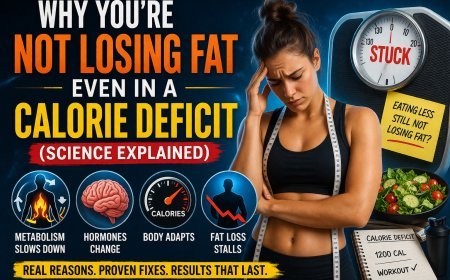
Why You’re Not Losing Fat Even When Doing Everything Right (11 Hidden Reasons Explained)
Not losing fat even though you’re dieting and exercising? Discover 11 hidden reasons fat loss stalls and what to do next with science-based solutions that actually help.
Quick Answer
If you are not losing fat even though you are trying hard, the problem is usually not motivation. The most common reasons are hidden calorie intake, a smaller calorie deficit than expected, reduced daily movement, poor sleep, low protein intake, metabolic adaptation, water retention, or a plan that is too hard to sustain.
Most common issue: you are eating more calories than you realize.
Most ignored issue: your daily movement has dropped without you noticing.
Most misunderstood issue: metabolic adaptation can slow progress, but it does not make fat loss impossible.
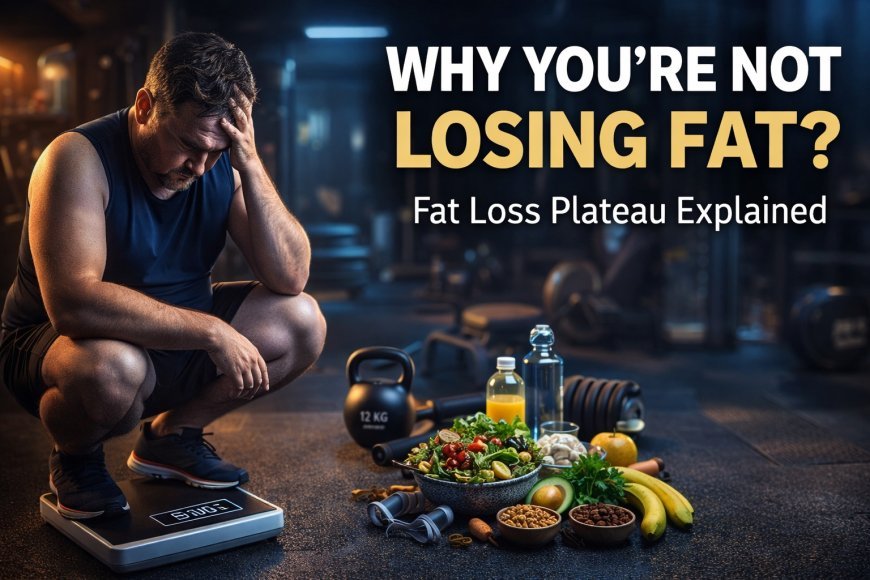
Why You’re Not Losing Fat
A science-based breakdown of the hidden reasons fat loss stops even when effort feels high.
- ✔ Hidden calorie intake
- ✔ Low daily movement
- ✔ Metabolic adaptation
- ✔ Poor sleep and recovery
- ✔ Unsustainable dieting strategy
Table of Contents
- Why Fat Loss Stops
- 1. You Are Eating More Than You Think
- 2. Your Calorie Deficit Is Smaller Than Expected
- 3. Your Daily Movement Has Dropped
- 4. Plateau vs Metabolic Adaptation
- 5. You Are Not Eating Enough Protein
- 6. You Are Losing Muscle
- 7. Sleep and Stress Are Working Against You
- 8. Your Expectations Are Too Fast
- 9. Weekend Habits Are Erasing Progress
- 10. Water Retention Is Hiding Fat Loss
- 11. Your Plan Is Too Hard to Sustain
- What to Do Next
- FAQ
Why Fat Loss Stops Even When You Feel Like You’re Doing Everything Right
Fat loss can stall even when effort feels high.
This is frustrating because most people assume more effort should always produce more progress.
But fat loss is not only about trying harder.
It depends on energy balance, movement, sleep, recovery, muscle retention, hunger, consistency, and how accurately your plan matches real life.
Most people get stuck because one or more hidden factors are reducing their calorie deficit or making the plan harder to follow.
If you want the deeper foundation first, read the Fat Loss Blueprint.
1. You Are Eating More Than You Think
This is the most common reason fat loss stops.
Many people believe they are in a calorie deficit, but small errors add up quickly.
Common hidden calories include:
- Liquid calories
- Cooking oils
- Sauces and dressings
- Untracked snacks
- Larger portions than expected
- Weekend meals
- Healthy foods eaten in excess
The issue is not that these foods are “bad.”
The issue is that they still contain energy.
Fat loss depends on energy balance. Even high-quality foods can prevent fat loss if total intake is higher than expected.
2. Your Calorie Deficit Is Smaller Than Expected
You may be eating less than before but still not eating little enough to create consistent fat loss.
This happens often when people estimate instead of calculating.
For example, someone may reduce portions but also reduce movement, snack more on weekends, or underestimate calorie-dense foods.
The result is a much smaller deficit than expected.
To estimate your needs more accurately, use the Daily Calorie Needs Guide.
3. Your Daily Movement Has Dropped
NEAT stands for non-exercise activity thermogenesis.
It includes the calories you burn from daily movement outside formal workouts.
Examples include:
- Walking
- Standing
- Household tasks
- Taking stairs
- General movement during the day
When people diet, they often move less without realizing it.
This can reduce total calorie burn and shrink the deficit.
This is why someone can eat the same calories and suddenly stop losing fat.
The diet did not magically stop working. Total energy expenditure changed.
4. Plateau vs Metabolic Adaptation
A fat loss plateau and metabolic adaptation are related, but they are not exactly the same.
A plateau means progress has slowed or stopped.
Metabolic adaptation means your body has reduced energy expenditure in response to weight loss, dieting, and lower body mass.
Common signs include:
- Lower energy
- More hunger
- Reduced daily movement
- Slower scale progress
- Training performance decline
This does not mean your metabolism is broken.
It means your plan may need adjustment.
Helpful next reads:
Stuck in a Fat Loss Plateau?
Learn how plateaus happen and what to adjust before cutting calories harder.
5. You Are Not Eating Enough Protein
Protein plays a major role in successful fat loss.
Many people focus only on calories while ignoring protein intake.
Adequate protein may help:
- Preserve muscle mass
- Improve satiety
- Support recovery
- Reduce hunger
- Improve body composition
Low protein intake can make dieting harder and increase the risk of losing lean mass.
For a complete breakdown, read: Optimal Protein Intake
6. You Are Losing Muscle Along With Fat
Weight loss and fat loss are not always the same thing.
Without sufficient protein and resistance training, some of the weight you lose may come from muscle tissue.
Muscle loss may contribute to:
- Lower metabolic rate
- Reduced strength
- Poor body composition
- Slower long-term progress
This is why preserving muscle should always be part of a fat loss strategy.
See: How to Lose Fat Without Losing Muscle
7. Sleep and Stress Are Working Against You
Poor sleep and chronic stress do not stop fat loss completely.
However, they can make the process much more difficult.
Sleep deprivation may affect:
- Hunger levels
- Food cravings
- Recovery
- Training performance
- Decision making
Stress may also influence eating behaviors and overall adherence.
This is why sleep quality should never be ignored.
Read: Sleep and Weight Loss
8. Your Expectations May Be Unrealistic
Many people expect progress to happen every day.
Real fat loss rarely works that way.
Progress often includes:
- Temporary stalls
- Water retention
- Plateaus
- Normal fluctuations
- Weeks with slower changes
These experiences are normal.
The scale does not always reflect fat loss immediately.
Patience matters.
9. Weekend Habits May Be Canceling Your Weekly Deficit
Many people follow their plan perfectly during the week.
But weekends can quietly erase progress.
Common examples include:
- Restaurant meals
- Alcohol intake
- Untracked snacks
- Large portions
- Reduced activity
This does not mean weekends are bad.
But consistency across the entire week matters more than perfection Monday through Friday.
10. Water Retention Can Hide Real Fat Loss
Fat loss and scale weight are not always the same.
Water retention may temporarily mask progress.
Common causes include:
- High sodium intake
- Poor sleep
- Stress
- Intense training
- Hormonal fluctuations
This is one reason daily weigh-ins can feel confusing.
Short-term scale changes do not always represent body fat changes.
11. Your Plan Is Too Hard to Sustain
One of the biggest reasons people stop making progress is simple:
The plan requires more discipline than real life can support.
Common warning signs include:
- Constant hunger
- Low energy
- Food obsession
- Poor workout performance
- Frequent binge episodes
- Mental exhaustion
If your plan is impossible to maintain, it is not the right plan.
Sustainability is often more important than intensity.
Which Problem Is Most Likely Yours?
| Problem | Most Likely Cause |
|---|---|
| Hungry all the time | Aggressive deficit or low protein |
| Scale not moving | Water retention or plateau |
| Low energy | Recovery, sleep, or muscle loss |
| No visible progress | Small calorie deficit or low NEAT |
| Repeated weight regain | Unsustainable strategy |
Need a Bigger Picture?
Learn how sustainable fat loss really works.
What Should You Do Next?
If you are not losing fat, the solution is rarely to panic or slash calories even further.
Instead, start by identifying the most likely bottleneck.
Ask yourself:
- Am I accurately tracking my intake?
- Has my daily movement decreased?
- Am I eating enough protein?
- Am I preserving muscle?
- Am I sleeping enough?
- Am I expecting progress too quickly?
- Is my plan realistic?
Most fat loss problems are not caused by a lack of effort.
They are caused by a mismatch between biology and strategy.
The Long-Term Solution
Sustainable fat loss is usually built on a few key principles:
- Moderate calorie deficits
- High protein intake
- Strength training
- Daily movement
- Quality sleep
- Stress management
- Consistency over perfection
- Flexible eating habits
- Patience
The goal is not to lose weight as quickly as possible.
The goal is to build habits that can support results for years.
Final Thoughts
If you're not losing fat, it does not automatically mean you are doing everything wrong.
Most people are much closer to success than they think.
Often, one or two hidden factors are responsible for stalled progress.
The solution is usually not more restriction.
The solution is better understanding.
Fat loss is rarely linear.
Plateaus happen.
Water retention happens.
Stress happens.
Life happens.
Results vary. Consistency matters.
Related Guides
- Science-Based Fat Loss
- Fat Loss Plateau Explained
- Calorie Deficit and Metabolic Adaptation
- How to Lose Fat Without Losing Muscle
- Optimal Protein Intake
- Sleep and Weight Loss
- Gut Health and Weight Loss
- Supplements for Fat Loss
- LeanBiome Review
- Mitolyn Review
Frequently Asked Questions
Why am I not losing fat even though I exercise?
Exercise helps, but calorie intake, sleep, protein intake, and daily movement also play important roles.
Can stress stop fat loss?
Stress does not completely stop fat loss, but it may affect appetite, recovery, and adherence.
Why did fat loss suddenly stop?
Plateaus, metabolic adaptation, reduced activity, and water retention are common reasons.
Can water retention hide fat loss?
Yes. Temporary water retention may mask real progress on the scale.
Why am I losing weight but not body fat?
Some weight loss may come from muscle or water rather than fat.
How important is protein?
Protein helps preserve muscle and improve satiety during dieting.
Does sleep affect weight loss?
Yes. Poor sleep may make fat loss more difficult by influencing hunger and recovery.
Can eating too little slow progress?
Very aggressive diets may increase fatigue, hunger, and muscle loss, making adherence harder.
Should I cut calories more?
Not always. Sometimes improving tracking accuracy, sleep, activity, or protein intake is more effective.
What is the most common reason people stop losing fat?
Hidden calorie intake and reduced daily movement are among the most common reasons.
Can I still lose fat after a plateau?
Yes. Plateaus are normal and can usually be managed through adjustments and consistency.