Best Bodyweight Home Workout Program Review 2026: Can You Build Muscle at Home?
Best bodyweight home workout program review covering muscle-building potential, fat loss support, progression structure, recovery, beginner suitability, and realistic long-term results.
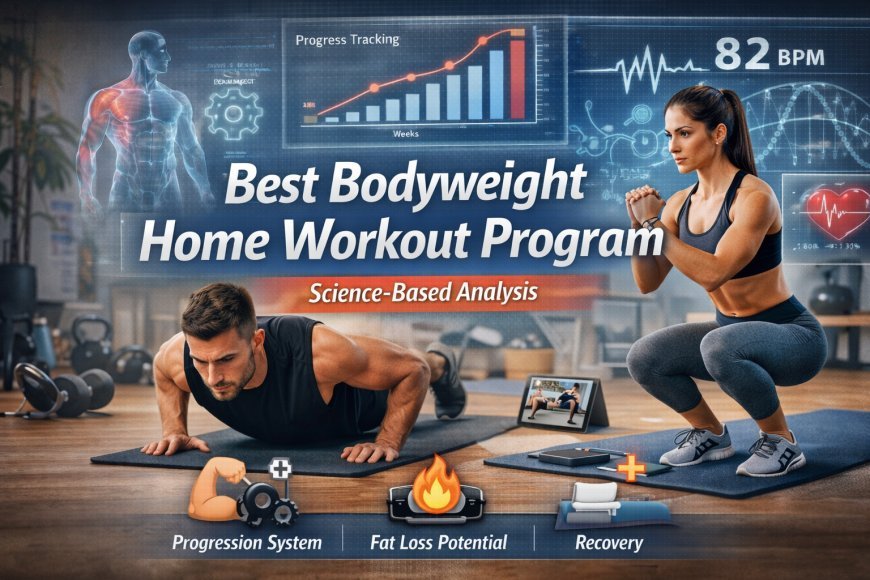
Bodyweight workout programs have become increasingly popular because they allow people to train consistently without relying on expensive gym memberships or complex equipment.
Modern no-equipment fitness systems now use progression, recovery planning, and structured overload methods to support strength development, conditioning, and long-term sustainability at home.
This review examines whether a structured bodyweight workout program can realistically build muscle, support fat loss, and create measurable results without requiring a gym environment.
Can It Build Muscle and Burn Fat Without Equipment?
Bodyweight training has evolved far beyond basic push-ups and sit-ups.
Modern bodyweight home workout programs now apply progressive overload, structured volume, and periodized training — all without requiring a gym.
The real question is:
Can a bodyweight-only program actually build muscle and support fat loss?
To compare this with other structured systems, start with our best home workout programs guide and our digital fitness programs comparison.
Looking for a Structured No-Equipment Workout System?
Some bodyweight workout programs are designed around progression, movement quality, consistency, and realistic long-term fitness rather than random daily workouts.
- ✔ No gym required
- ✔ Beginner-friendly progression
- ✔ Structured bodyweight training
- ✔ Designed for sustainable consistency
How This Program Is Structured
This program follows a structured model instead of random workouts.
- progressive overload via reps
- tempo-controlled training
- weekly progression
- recovery scheduling
Typical weekly split:
- push training
- pull training
- lower body
- core work
- conditioning
This aligns with the better systems featured in our top digital fitness programs guide.
Does This Bodyweight Program Really Work?
Yes — but only if the program includes progression.
That is the key difference between effective bodyweight training and random no-equipment workouts.
This program works by using:
- rep progression
- tempo manipulation
- unilateral movements
- structured weekly volume
It does not work as a shortcut.
If used consistently, it can build muscle, improve conditioning, and support fat loss. If used randomly, progress will be limited.
Can Bodyweight Training Build Muscle?
Yes — if progression exists.
- mechanical tension
- training volume
- progressive overload
- recovery
This program uses:
- unilateral movements
- leverage changes
- tempo manipulation
Beginners and intermediate users can absolutely build muscle with this approach.
For nutrition support, read our protein intake guide.
Bodyweight Training vs Weight Training
One of the biggest debates in fitness is whether bodyweight training can truly compete with traditional weight training for muscle growth and long-term physical development.
Scientifically, both approaches can build strength, improve conditioning, and support muscle development when progressive overload exists.
Traditional weight training often allows easier long-term overload progression because resistance can be increased more precisely over time.
Bodyweight systems, however, create progression differently through:
- leverage changes
- tempo manipulation
- higher repetitions
- unilateral variations
- movement complexity
For beginners and intermediate users, structured bodyweight training may still produce significant improvements in strength, movement quality, muscular endurance, and body composition.
At the advanced level, some users may eventually require heavier external loading to maximize hypertrophy and strength progression.
In practical terms, the better system is usually the one a person can follow consistently while recovering properly and maintaining long-term adherence.
Why Relative Strength and Movement Control Matter
One advantage of bodyweight training is that it often develops more than muscle size alone. Many structured bodyweight systems also improve movement coordination, stability, joint control, and relative strength.
Relative strength refers to how strong a person is compared to their body weight. This is one reason bodyweight athletes often develop impressive movement efficiency, balance, and muscular control without relying entirely on heavy external resistance.
Exercises such as push-ups, split squats, planks, pull movements, and unilateral variations require the body to stabilize movement patterns continuously during training.
That stabilization demand may improve body awareness, movement mechanics, and muscular coordination over time.
This is also why many people find bodyweight systems easier to maintain long term. In addition to strength and conditioning benefits, the workouts often feel more accessible, flexible, and sustainable in everyday life.
For beginners and intermediate users, consistency with structured bodyweight progression may produce far better long-term results than constantly switching between random high-intensity programs.
Fat Loss Potential
Fat loss depends on calorie balance, not just workouts.
This program supports fat loss by:
- increasing activity
- improving consistency
- adding conditioning circuits
For the full fat-loss system, read our metabolic nutrition guide and fat loss plateau guide.
If fat loss is your main problem right now, also read:
Looking for a Sustainable No-Equipment Fitness System?
Some structured bodyweight workout programs are designed around progression, recovery balance, and long-term consistency rather than extreme short-term intensity.
- ✔ No gym required
- ✔ Beginner-friendly structure
- ✔ Flexible home training format
- ✔ Designed for realistic long-term progress
Why Recovery Still Matters in Bodyweight Training
One common misconception is that bodyweight workouts require less recovery simply because they do not use heavy external weights. In reality, structured bodyweight training can still create significant muscular fatigue and recovery demands.
High repetitions, unilateral exercises, tempo-controlled movements, and conditioning circuits may place substantial stress on muscles, joints, and the nervous system when volume becomes excessive.
This is especially important for beginners who often assume more workouts automatically lead to faster progress.
Scientifically, physical adaptation occurs during recovery — not during the workout itself. Training creates stress, while recovery allows the body to rebuild, adapt, and improve performance over time.
That is one reason sustainable bodyweight systems usually include progression control, rest scheduling, and workload management rather than pushing maximum intensity every day.
For long-term success, consistency and recoverability are often more important than constantly training to exhaustion.
Results: What to Expect
| Timeframe | What You May Notice |
|---|---|
| Week 1–2 | Better movement quality and exercise control |
| Week 3–4 | Improved strength and endurance |
| Week 6–8 | Visible body-composition improvement if nutrition is aligned |
As with all home training systems, consistency matters more than intensity spikes.
Why Most People Quit Home Workout Programs Too Early
One of the biggest reasons people fail to see results from home fitness programs is not lack of program quality. In many cases, they simply stop before meaningful adaptation occurs.
Bodyweight training often produces slower visible changes compared to the unrealistic transformation claims commonly seen online. Early improvements may appear first in movement quality, exercise control, conditioning, and daily energy rather than dramatic visual changes.
Because of this, many users incorrectly assume the program is not working and begin switching between different workout systems too quickly.
Scientifically, strength development, muscular endurance, coordination, and body composition changes all require repeated exposure and progressive adaptation over time.
This is one reason sustainable home fitness systems focus heavily on progression, consistency, recovery management, and behavioral adherence rather than short-term intensity alone.
In practical terms, the people who usually get the best long-term results are not necessarily the most motivated individuals at the beginning. They are often the ones who continue training consistently even when motivation fluctuates.
Who This Program Is Best For
- beginners
- home workout users
- busy professionals
- no-equipment training
Compare with:
Structured bodyweight programs are often especially effective for beginners because they remove many of the common barriers associated with gym training, including equipment costs, crowded environments, and overly complex programming.
Many beginner-friendly bodyweight systems focus first on movement quality, consistency, exercise control, and sustainable progression before introducing more advanced variations.
This gradual progression model may help reduce burnout while improving long-term adherence for users starting fitness after long inactive periods.
For many people, learning how to train consistently matters more initially than chasing maximum workout intensity.
Who Should NOT Use This Program
- people expecting instant transformation
- advanced trainees needing long-term heavy overload
- users unwilling to stay consistent
- people looking for a shortcut instead of a training system
This program rewards consistency, not shortcuts.
Who This Program May Not Be Ideal For
This type of bodyweight training program may work very well for beginners and intermediate users who want structured home workouts without equipment. However, it may not be the ideal long-term solution for every training goal.
Advanced lifters focused primarily on maximum hypertrophy, heavy strength progression, or highly specialized athletic performance may eventually require more external resistance and advanced programming.
It may also feel too slow for users expecting rapid transformation results without long-term consistency. Bodyweight systems generally reward progression, patience, recovery, and repeated training exposure over time.
People looking for highly aggressive short-term fat loss solutions may also become frustrated if expectations are unrealistic.
As with any fitness system, users with injuries, medical limitations, or movement restrictions should approach exercise selection carefully and consider professional guidance when needed.
From a practical perspective, this program tends to work best for people who value sustainability, flexibility, movement quality, and realistic long-term progress rather than extreme short-term intensity.
Pros and Cons
Pros
- no equipment needed
- structured progression
- accessible
- easy to follow at home
- good fit for beginners and intermediates
Cons
- limited long-term overload
- requires consistency
- advanced users may eventually outgrow it
Pricing and Access
This program includes:
- workout calendar
- video library
- progression plan
★★★★★ 4.8/5 Rating
Bodyweight Home Workout Program
No-equipment system designed for strength, fat loss, and consistency. Check Latest Price & Availability
Is This Program a Scam or Legit?
This program is legit — but it is not magic.
Its value comes from structure, not hype.
It can work because it includes:
- clear progression
- repeatable weekly structure
- scalable bodyweight overload methods
The program is legitimate.
The expectations must still be realistic.
FAQ
Can bodyweight workouts build muscle?
Yes, with proper progression and volume.
Is it good for fat loss?
Yes, when combined with proper nutrition.
Do I need equipment?
No.
Is this beginner-friendly?
Yes. This program is especially strong for beginners and intermediate users who want structure without equipment.
Will it eventually stop working?
It may become less effective for advanced users over time if there is no further progression, but it can work very well for most home trainees in the short to medium term.
Can you really build muscle with bodyweight workouts?
Yes. Muscle growth depends on progressive overload, training volume, recovery, and consistency. Structured bodyweight programs can support muscle development when progression is applied properly.
Is bodyweight training good for fat loss?
Bodyweight training can support fat loss by increasing activity levels, improving conditioning, and helping maintain consistency. Nutrition and calorie balance still play a major role.
How long does it take to see results from bodyweight training?
Many users notice improvements in movement quality and endurance within the first few weeks. Visible body composition changes usually require longer-term consistency with both training and nutrition.
Do bodyweight workouts require recovery days?
Yes. Even without heavy external weights, bodyweight training can still create muscular fatigue and nervous system stress. Recovery remains important for long-term progress.
Can beginners start with bodyweight programs?
Yes. Many structured bodyweight systems are beginner-friendly because exercises can often be modified and progressed gradually over time.
Will bodyweight workouts eventually stop working?
Advanced trainees may eventually require more external resistance for maximum hypertrophy or strength progression. However, bodyweight systems can remain highly effective for general fitness, conditioning, and sustainable training.
Final Decision: Should You Use This Program?
Use it if:
- you want a no-equipment plan
- you need structure at home
- you are beginner to intermediate level
- you want strength and fat-loss support without a gym
Do NOT use it if:
- you expect instant fat loss
- you want advanced hypertrophy progression
- you are looking for a shortcut instead of a system
Best use case: consistent no-equipment training with realistic progression.
Need a More Structured Home Workout Plan?
Many people struggle with consistency because their workouts lack progression, recovery structure, or realistic scheduling.
Some bodyweight fitness systems are built specifically to simplify home training while supporting long-term sustainability and progression.
- ✔ Structured no-equipment workouts
- ✔ Progressive overload approach
- ✔ Beginner and intermediate friendly
- ✔ Designed for sustainable consistency
Final Verdict
This bodyweight home workout program is not a shortcut.
But it is structured — and structure is what drives results.
For beginners and intermediate users, that structure may be enough to build strength, improve conditioning, and support fat loss without equipment.
For alternatives, revisit our home workout programs guide.