Metabolic Health Guide: Optimize Your Metabolism for Fat Loss
Learn how to improve metabolic health for effective fat loss. Discover metabolism boosters, lifestyle strategies, and science-based tips for long-term weight management.
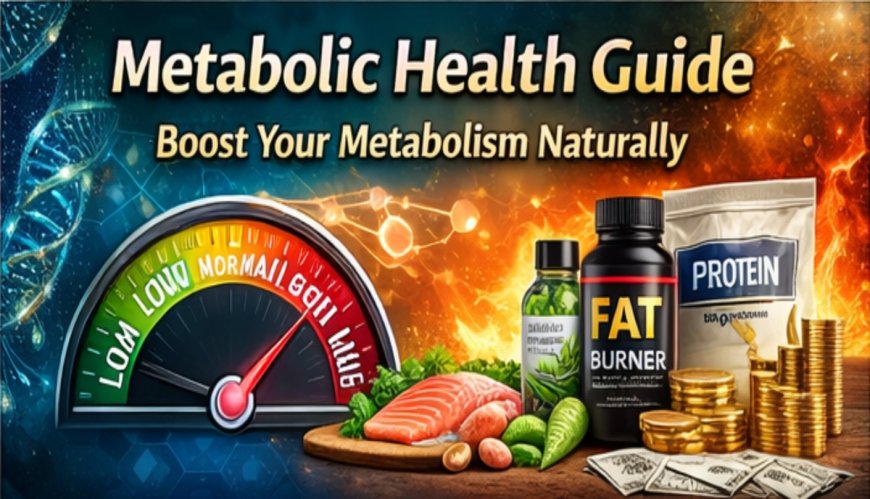
Metabolic Health Guide (Optimize Your Metabolism for Fat Loss)
Metabolic health is the foundation of fat loss and long-term wellness. A healthy metabolism allows your body to burn calories efficiently, regulate blood sugar, and maintain stable energy levels.
Poor metabolic health can contribute to:
- difficulty losing fat
- increased fat storage
- low energy
- hormonal imbalances
Understanding and improving metabolic health can make fat loss easier and more sustainable.
What Is Metabolic Health?
Metabolic health refers to how well your body manages:
- blood sugar
- cholesterol
- blood pressure
- fat storage
- energy production
A metabolically healthy body converts food into energy more efficiently and maintains better hormonal balance.
Factors That Affect Metabolic Health
Metabolic health depends on multiple factors:
- Muscle Mass – more muscle generally supports a higher metabolic rate
- Physical Activity – regular movement improves metabolic efficiency
- Nutrition – nutrient-dense foods support metabolic function
- Sleep – poor sleep disrupts hormonal balance
- Stress – chronic stress can raise cortisol
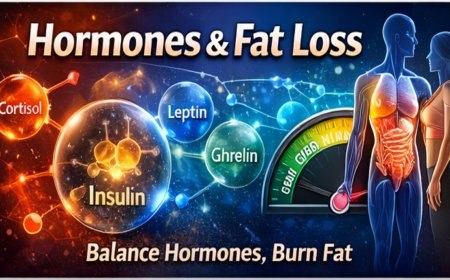
- Hormonal Balance – thyroid hormones, insulin, leptin, and ghrelin all play a role
For a deeper explanation of hormonal influence, read our Hormones and Fat Loss Guide.
Metabolic Flexibility
Metabolic flexibility is the ability to switch efficiently between fuel sources:
- carbohydrates
- fats
A flexible metabolism can better adapt to changing energy demands. Poor metabolic flexibility may contribute to fat storage and insulin resistance.
Nutrition Strategies for Metabolic Health
To support metabolic health, focus on:
- high protein intake to preserve muscle and increase the thermic effect of food
- high-fiber foods to improve satiety and blood sugar control
- healthy fats to support hormone production
- whole foods to reduce reliance on ultra-processed foods
For a full breakdown of effective eating strategies, read our Nutrition for Fat Loss Guide.
Exercise and Metabolic Efficiency
Exercise improves metabolism by:
- building muscle, which increases resting calorie burn
- improving insulin sensitivity
- enhancing fat oxidation
Effective exercise options include:
- Strength Training – bodyweight workouts or resistance training
- HIIT – short bursts of higher-intensity effort
- Cardio – moderate-intensity work for calorie expenditure and endurance
For a beginner-friendly starting point, read our Beginner Weight Loss Guide.
Sleep, Stress, and Metabolism
Quality sleep and stress management are critical for metabolic health.
- poor sleep increases ghrelin, which can raise appetite
- poor sleep reduces leptin, making satiety signals weaker
- chronic stress raises cortisol, which may contribute to fat storage
For a deeper look at this relationship, read our Sleep and Weight Loss Guide.
Supplements That Support Metabolic Health
Certain supplements may help support metabolic efficiency when paired with proper nutrition and exercise:
- caffeine for a mild metabolic boost
- green tea extract for fat oxidation support
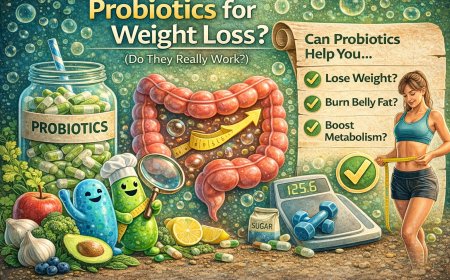
- probiotics for gut and metabolic health support
- protein supplements for muscle preservation
For a broader supplement overview, read our Supplements for Fat Loss Guide.
You can also explore one of our detailed product reviews here: NewEra Protect Review.
Habits for Long-Term Metabolic Health
Sustainable habits are the key to long-term metabolic health:
- balanced nutrition
- regular exercise
- adequate sleep
- stress reduction
- consistent daily routines
These habits not only support fat loss, but also improve energy levels and hormone balance.
Final Thoughts
Metabolic health is the backbone of fat loss and long-term wellness.
Focus on:
- muscle preservation and strength training
- a whole-food, nutrient-dense diet
- quality sleep
- stress management
Optimizing metabolism helps your body burn fat more efficiently, regulate hormones, and maintain stable energy.
To go deeper into science-based fat loss strategies, continue with our Ultimate Fat Loss Guide.