
















How to Calculate Your Daily Calorie Needs for Fat Loss (Science-Based Guide)
Learn how to calculate your daily calorie needs using BMR and TDEE formulas. Includes macro breakdown, calorie deficit strategy, scientific references, FAQ, and expert insights.
Understanding your daily calorie needs is the foundation of sustainable fat loss and muscle gain. Without precise numbers, dieting becomes guesswork rather than strategy.
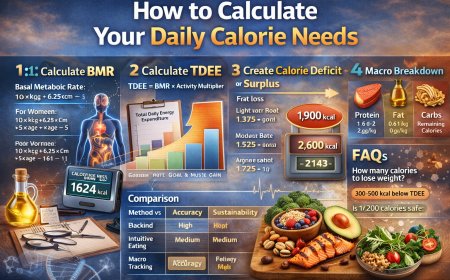
Step 1: Calculate Your Basal Metabolic Rate (BMR)
Your BMR represents the calories your body burns at complete rest. The most validated predictive formula is the Mifflin-St Jeor equation.
BMR Formula for Men
10 × weight (kg) + 6.25 × height (cm) − 5 × age + 5
BMR Formula for Women
10 × weight (kg) + 6.25 × height (cm) − 5 × age − 161
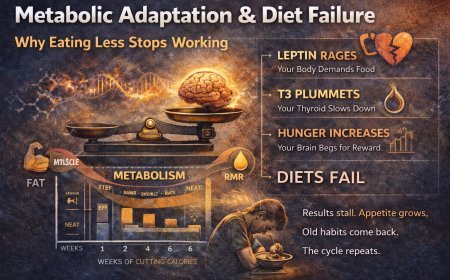
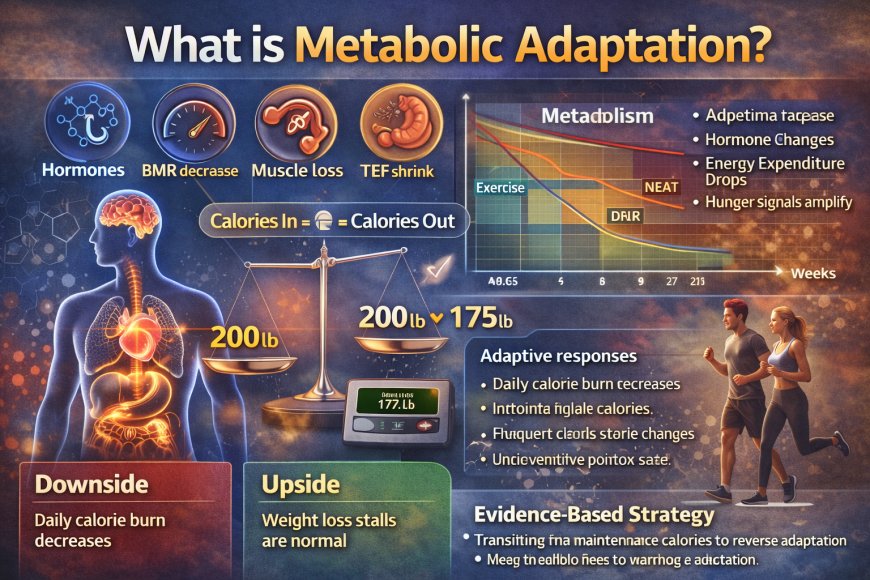
For deeper metabolic adaptation analysis, see Science of Weight Loss.
Step 2: Calculate Total Daily Energy Expenditure (TDEE)
TDEE = BMR × Activity Multiplier
- Sedentary – 1.2
- Lightly active – 1.375
- Moderately active – 1.55
- Very active – 1.725
- Athlete – 1.9
Step 3: Create a Calorie Deficit or Surplus
Fat Loss
- Moderate deficit: −300 to −500 kcal
- Aggressive deficit: −700 kcal (short term only)
Muscle Gain
- Lean surplus: +200 to +300 kcal
Explore structured nutrition systems here: Diet & Nutrition Programs.
Macro Breakdown Strategy
Protein
1.6–2.2 g per kg bodyweight to preserve muscle mass.
Fat
0.6–1 g per kg bodyweight for hormonal balance.
Carbohydrates
Remaining calories after protein and fat allocation.
Advanced macro science: Nutrition Fundamentals Guide.
Common Mistakes
- Overestimating activity levels
- Ignoring liquid calories
- Frequent drastic calorie changes
- Underestimating portion sizes
- Crash dieting
Comparison Table
| Method | Accuracy | Sustainability |
|---|---|---|
| Manual Tracking | High | High |
| Intuitive Eating | Low (Beginner) | Medium |
| Extreme Low-Calorie Diet | Short-Term | Very Low |
| Macro Tracking | Very High | High |
Scientific References
- Mifflin MD et al. (1990). A new predictive equation for resting energy expenditure in healthy individuals. American Journal of Clinical Nutrition.
- Hall KD et al. (2012). Quantification of the effect of energy imbalance on bodyweight. The Lancet.
- Leibel RL et al. (1995). Changes in energy expenditure resulting from altered body weight. New England Journal of Medicine.
- Thomas DM et al. (2010). A mathematical model of weight change. Journal of Biological Dynamics.
About the Author
Fitness Health eBooks Research Team focuses on evidence-based nutrition science, metabolic research, and sustainable fat loss methodologies. All content is reviewed against peer-reviewed scientific literature before publication.
What's Your Reaction?